This month, as columnists and pundits alike reflect on the meaning of the recent election and environmentalists consider what legislative initiatives are on the table, it seems a good opportunity to examine the choices and policies that should be considered when addressing America’s environmental and energy options. In other words, the trade-offs. Already, in the three weeks since President Obama referenced climate change in his early morning acceptance speech in Chicago, the political world has discussed the potential of a carbon tax, the possibility of comprehensive climate change legislation and the likelihood of coalitions to offer piecemeal solutions.

But even beyond these topics, one of the key phrases that we’ve heard bandied about is the potentially rewarding but ever-elusive “energy independence” — independence from foreign oil. Ideas about how this independence should be achieved vary with each group, industry or interested party. All sectors of energy production are impacted, as are multitudinous environments from the ocean floor to our forests to our mountaintops. The differing factor between each view is the value that is placed on each source of energy. Emphasis on one source of energy over another is one side of the trade-off. The result of that emphasis is another.
More traditional sources of energy possess well examined trade-offs. For example, coal involves mining the earth and burning the fuel, resulting in emissions, while nuclear involves the use of a radioactive substance that can, as Fukushima and Three Mile Island have shown, have disastrous results if anything goes wrong. But coal is also very inexpensive to use, which is why it has served as this country’s main energy source for hundreds of years, and nuclear power releases no greenhouse gases, making it newly attractive for electric power generation.
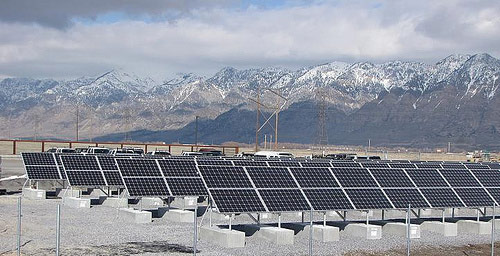
Today, as investment in and exposure of renewables increases, a fuller appreciation of the trade-offs involved with them is possible. What does it mean when the placement of solar panels in the sun-drenched Southwest intrudes on the habitat of the threatened Desert Tortoise? What about wind-developments and their impact on birds and bats? For both solar and wind, acres upon acres of land are required for production of energy at commercially useful levels. What does it mean to trade undeveloped land for solar panel siting? Or the viewscape of a mountain ridge for a wind farm? Yet solar and wind are by far the cleanest forms of energy and, unlike fossil fuels, they can last an infinite amount of time. With no emissions, is a commitment of land in the present worth unlimited clean energy for the future?
The choices we must make in terms of energy policy all involve these trade-offs. But what path should we take? Are tax subsidies for ethanol still an appropriate expenditure? What about drilling in our national forests? All of these questions, plus a thousand more, should be asked in any serious discussion regarding our next steps in terms of energy and the environment.
The upcoming decisions that must be made to secure both our energy future and protect our environmental resources are not going to be easy. Trade-offs must be weighed, and short term gains may need to be bypassed for long term goals. While “all of the above” may turn out to be the solution to energy independence, it is critical that the trade-offs — what we give up compared to what we gain — are something we can all live with, in the end.