
By Doyle Irvin, American Forests
The band of merry outlaws carousing their way through the Sherwood Forest is well known and well covered. It’s become a formula: stealing from the rich, giving to the poor; the pretty maid flirting with the bandit chief while joking with the big oaf they call ‘Little;’ the friar tucking away into dinner with more zeal than he has for Mass; and, of course, the ubiquitous forest hideout. We’re here to share with you the famous legends of other outlaws with forest hideouts, all of whom really existed. Seriously, these are real people, who lived and breathed and loved trees like the rest of us. Whether the deeds attributed to them are true or not — well, that’s up to you to decipher.
Twm Sion Cati (Thomas Jones)
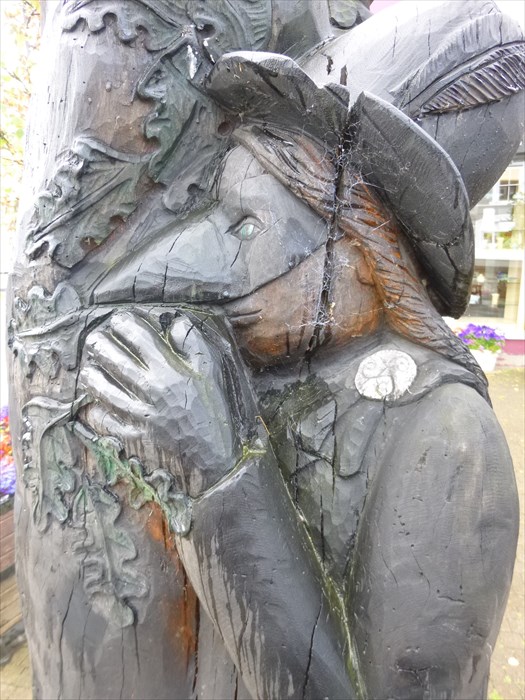
Born somewhere near Tregaron, Wales, in the year 1530, Twm Sion Cati is revered in the United Kingdom for being far too clever. He stole from the rich, and, well, sometimes gave to the poor — when it seemed likely to amuse. Though he spent much of his time traveling from crime to crime, Twm was known to hide from his nemesis, the Sheriff of Carmarthen, in a cave in the thickly forested Dinas Hill.
One of the most repeated tales about him recounts when a peasant asked him for assistance with stealing from a nearby merchant. Twm’s job was to distract the merchant while the peasant pilfered pitchers. Tom waltzed right into the shop, and after a minute of inspections told the merchant that one of his pitchers had a hole in it. The merchant, incensed and unconvinced, denied this accusation, so Twm asked him to test it out by feeling the inside of the pitcher. The merchant felt inside and still denied Twm’s assertion. Our bandit then replied, “How, if there was no hole, could you put your hand inside?” By this time his partner had escaped with the goods stolen during the distraction.
Twm was well known for being “sensitive,” which at the time meant “non-violent.” He would shoot arrows at you, but make sure to only hit your clothes in a way that would pin you to your saddle. He later (at daggerpoint) amicably convinced the heiress of Sir John Price to marry him, and, thus, became a respectable man, maintaining a position as Justice of the Peace in the local community until he died at the age of 79.
Juraj Jánošík

Juraj Janosik, whose name translates to “George,” is still revered in Eastern Europe as a folk hero. Born sometime in 1688, in what is now Slovakia, Juraj was a rebel freedom fighter by the tender age of 15. Potentially confused, he is known to have then joined the imperial army. Perhaps simply gullible, he was then convinced by an inmate that he was guarding to abscond and join the inmate’s group of bandits.
There, Juraj found his true passion, quickly becoming the leader of the gang. Hiding in the forests of Slovakia, he and his gang actually did steal from aristocrats, giving the money to the poor. He also forbade bloodshed, and both of these aspects of his legend are the main reasons Slovakians love him to this day.
Juraj’s tagline became notorious throughout Slovakia, Poland and Moravia. “Stop! Your soul belongs to God and your money belongs to me!” would ring out shortly before the wealthy experienced alternative tax. In a turn towards the ludicrous, Juraj was supposedly captured in a pub, when, while on the run, he slipped on peas thrown under his feet by a malignant crone. Faced with the traditional punishment for bandit leaders, death by hook, Juraj was given the option of clemency in exchange for enlisting himself and others into the army. As the story has it, he refused, stating that “If you have baked me so you should also eat me!” — then jumping on the hook.
Salvatore Guiliano
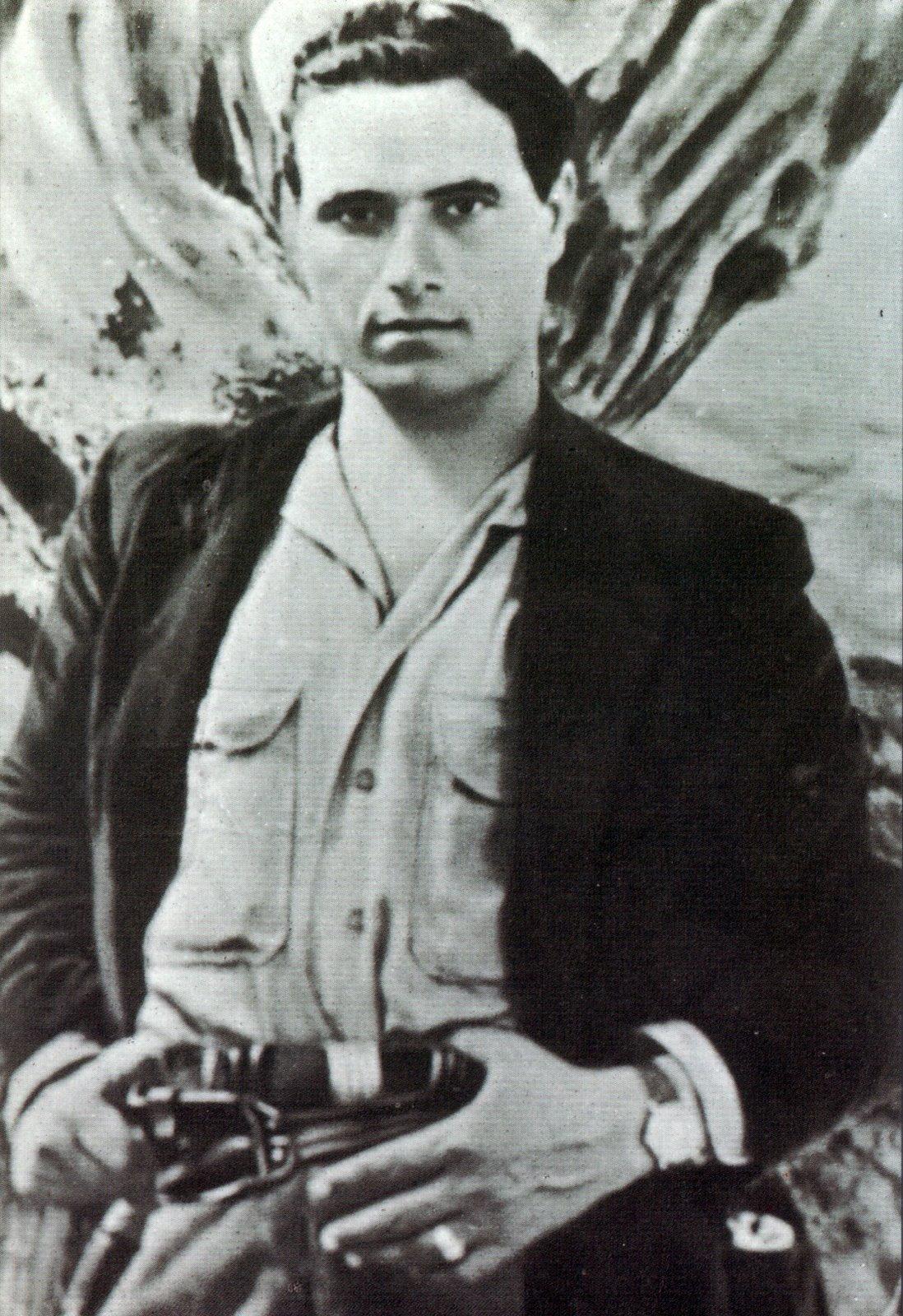
Handsome, Sicilian, notorious, and a black market philanthropist, Salvatore Guiliano pretty much had it made. He was born in the poverty-stricken town of Montelepre, Sicily, during 1922, and he got his start in banditry during World War II. Food supplies were dangerously short throughout the 1943 Allied invasion, so Salvatore smuggled grain to the starving peasants. Accidentally (or not-so-accidentally) killing a policeman while resisting arrest, Salvatore and his gang fled to the forested mountains near Sagano, Sicily, where he would pursue outlawry for the next seven years.
Salvatore was a hero to the local villagers, as he frequently shared his profits and procured medicine for the sick — he actually named his horse “Robin Hood.” At the same time, he was also feared, because of his penchant for killing informers. In the late 1940s, he had ascended to the rank of colonel in Sicily’s underground campaign for independence, writing two letters to U.S. President Harry Truman (proposing 51st-statehood for Sicily). He is understood to be the inspiration for The Godfather.
Salvatore’s downfall happened in 1947, when he and his gang accidentally shot 17 innocents. This happened to turn public perception against him, and three years later a 2,000-man police force finally snagged the outlaw, who had been betrayed by his trusted confidante, Gaspare Pisciotta. A seemingly sad end for the 27 year old — though some maintain to this day that he faked his own death and survived.
John Murrell
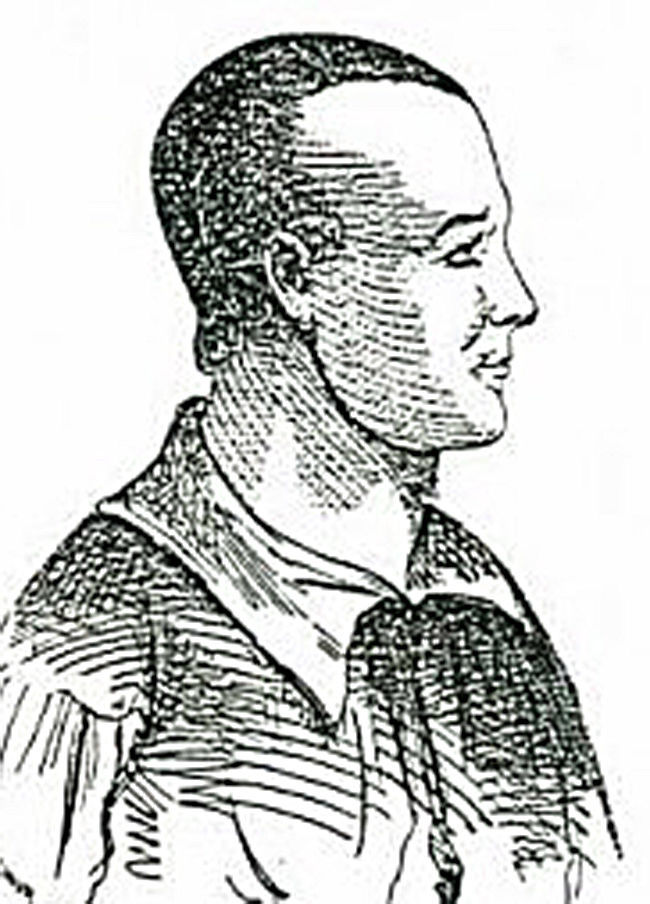
If all of our forested bandits were to be split among The Good, The Bad and The Ugly, John Murrell would be alone in the last category. There is very little of the spirit of Robin Hood about this man, if everything he is purported to have done actually happened. There are many conflicting narratives of truth that wrap around this figure. Robert E. Howard wrote about Murrell that:
“John A. Murrell was a hellbender, in Southwest vernacular. He planned no less than an outlaw empire on the Mississippi river, with New Orleans as his capital and himself as emperor. Son of a tavern woman and an aristocratic gentleman, he seemed to have inherited the instincts of both, together with a warped mind that made him as ruthless and dangerous as a striking rattler … surely in that man slept the seeds of greatness, overshadowed by the black petals of madness.”
At the same time, he was an outlaw, squirreling away in an authenticated forest hideout and bossing around a gang of followers with a silly name, so we wouldn’t be doing it justice if we neglected to mention John Murrell.
The boy that would become John Murrell was born in 1806, near Lunenburg County, Va. Then, he moved to Tennessee. His preacher father would travel frequently, and his mother would use her uncouth charms to distract male guests at their B’n’B while her sons rifled through their belongings. John would grow up to combine his parents’ professions, traveling as a pseudo-preacher who would entertain townspeople while his gang stole their horses. Shortly thereafter, he was known as the “Reverend Devil,” as well as the “Great Western Land Pirate.”
Murrell would soon outgrow horse-thieving, however. He moved on to slave-stealing, promising the slave his freedom if John could sell him and free him a few times along the way. If the slave survived all the way to freedom, we wouldn’t consider Murrell such a villain, but he is justly known for leaving no witnesses. Murrell organized a gang, one that Mark Twain claimed to be 1,000 strong, and named them the “Mystic Clan.” They constructed numerous hideouts throughout the forested Natchez Trace, carving secret symbols on trees to mark the location of their treasures.
Murrell’s coup de grace was supposed to be a mass slave uprising all throughout the South, during the chaos of which he and the Mystic Clan would loot all that was worth looting, before installing him as despot of New Orleans. He was found out and sentenced to 10 years of hard labor, during which he contracted a bunch of diseases and lost the last fragments of his sanity. He would die of tuberculosis shortly after being released. Murrell’s grave would be robbed, and his body dismembered, with his thumb to this day still being a centerpiece for the Tennessee State Museum.
It’s worth noting that many people believe that almost none of this is true — that Murrell was at most an average horse-thief, who had tall tales written about him by Virgil Stewart, a man who placed himself at the forefront of the effort to bust this “legendary” outlaw in a spectacularly self-congratulatory publication. The title of this story is in itself 78-words long. Despite the likely fictitiousness of the publication, it was taken seriously in many towns across the South, and 35 men were hung for supposedly being involved with the Mystic Clan, in what is known as the “Murrell Excitement.”