
In the first moments of HBO’s The Last of Us, a talk-show scientist describes what would happen if a fungal disease were to jump to humans. Spoiler alert: That’s what happens. Cordyceps, the fungi in the show, is loosely based on a real-life fungus that attacks ants — and it makes for some killer TV.
Most people don’t know that contagious fungal diseases are real, or that apocalyptic outbreaks are already happening across the globe. But instead of humans, they’re infecting plants and wildlife, and, in turn, decimating entire ecosystems. These fungal diseases are right up there with climate change and habitat loss as conservation threats. They are caused by fungi with exotic names like Pseudogymnoascus destructans and Batrachochytrium dendrobatidis. Unlike The Last of Us, these fungi don’t zombify their hosts — instead, many eat away at their victim’s skin and cause rapid, widespread die-offs. They’re killing frogs in our backyard ponds, bats hibernating in caves and ancient trees on high mountain peaks. They’re wiping out the very bottoms of our food chains, and the foundations of our ecosystems.
What do these real-life outbreaks look like? Let’s start with amphibian chytrid fungus. It’s 100% lethal, and it’s infected frogs, toads and salamanders on nearly every continent. First discovered in 1998, humans have helped the disease to spread through the global trade of wild amphibians. Once it’s present in an ecosystem, it’s hard to contain as it spreads by touch and through water. Many amphibians were already endangered, due to other causes, and chytrid takes them right over the edge. Researchers are working on treatments, like topical fungicides and boosting rare forms of genetic resistance — a common hope in all these outbreaks — but no one’s sure how we’ll treat a disease happening at this scale. For many amphibians, it’s already too late.
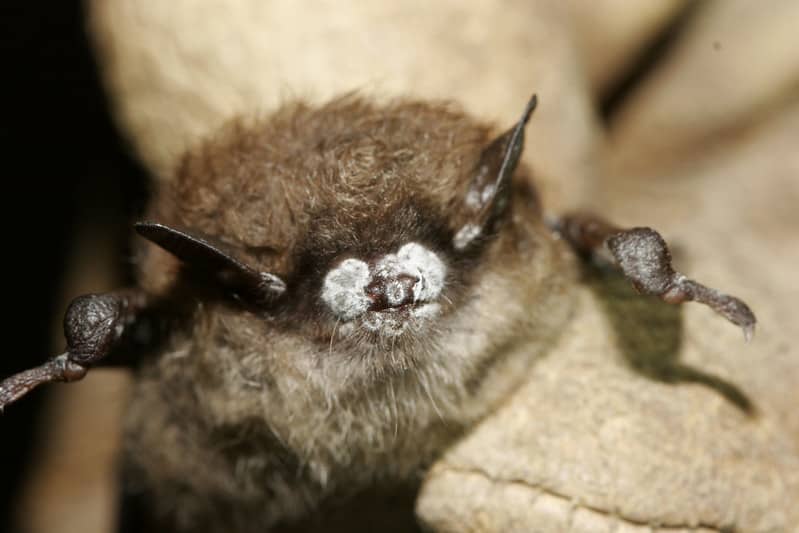
Photo Credit: Ryan von Linden/New York Department of Environmental Conservation
Then there’s white-nose syndrome, a fungal disease that affects hibernating bats. Scientists first detected the fungus in North America in 2006. Since then, it’s invaded caves, mines and other roosting areas, killing millions of bats in the process. It’s been detected in over 33 states, and it’s hyper-deadly — research has found 9/10 bats in a population die within five years of the disease reaching a site. So far, our only way of helping has been to slow the spread by not entering bat hibernation areas, where we might unwittingly carry the pathogens with us on our shoes and clothes. We should all be concerned about white-nose syndrome — bats are important pollinators and they are one of the main predators of mosquitoes.
These outbreaks aren’t confined to wildlife. They’re also affecting plants that are the basis of entire ecosystems. This is the case with the fungus Cronartium ribicoloa, which causes a disease called white pine blister rust that infects a family of trees called the five-needle white pines. It was accidentally introduced to the U.S. from Eurasia in the early 1900s, and since then it has spread from coast to coast. The fungus grows through branches and eventually into the trunks, cutting off the flow of nutrients as it slowly strangles the tree. One of the most susceptible species — the whitebark pine, an iconic tree that defines many of Western America’s most beloved mountain ranges — was recently listed as threatened under the Endangered Species Act. It is the widest ranging tree species ever listed. Others will likely follow.
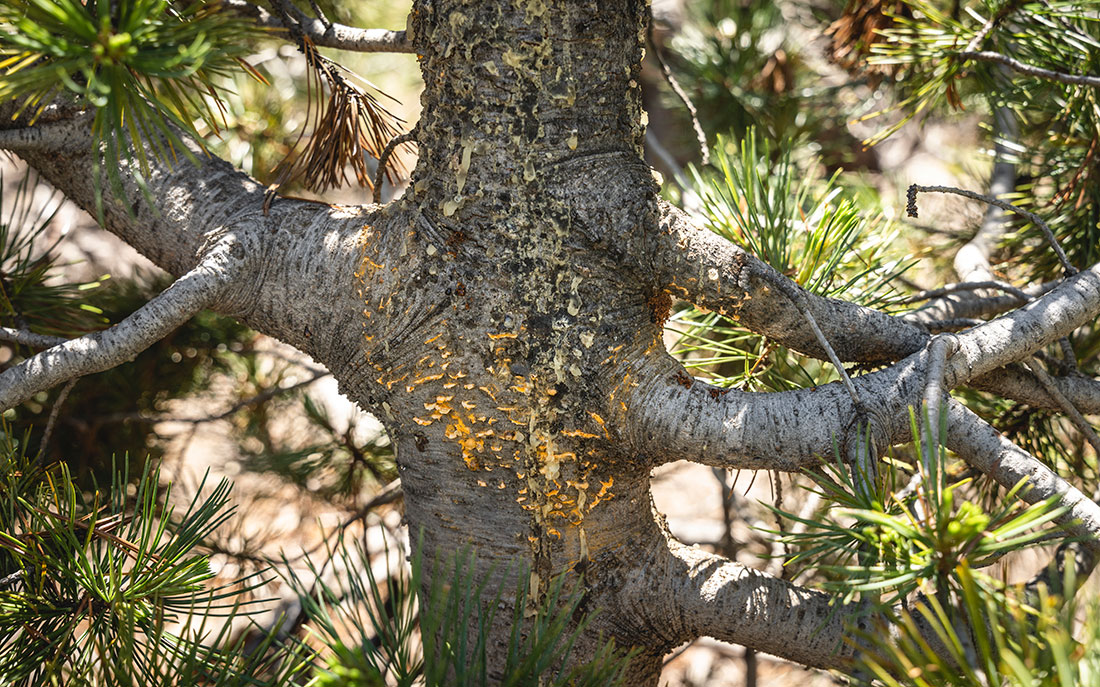
Photo Credit: Jesse Roos / American Forests
Our organization, American Forests, has been working to stop the spread of white pine blister rust and plant seedlings with genetic resistance for decades. This is how we know about the seriousness of the fungal threat.
We can fight each one of these diseases, but it takes a village. We need public support for science, and we need more scientists working on cures. We need to back the organizations doing the hard work. Finally, we need to practice conservation in all its forms and reduce other threats — like climate change and habit destruction — in order to blunt the impact of these diseases.