
There’s a particular kind of beauty that appears only when people create something together — something no one could shape alone. It’s a beauty made of connection.
Last year, as I stepped into my role as president and chief executive officer, American Forests was celebrating its 150-year legacy. This organizational milestone was, at its core, a celebration of the power of collective action and impact. For 150 years, American Forests has stood boldly at the forefront of the conservation movement, working innovatively with partners to generate far greater impact than we could accomplish alone. Partnerships are the roots from which we’ve grown, intertwined throughout every facet of our work.
The next 150 years begin now. And they begin with all of us.
The threats facing our lands, waters and people are immense. Wildfires are ravaging our forests across the West, leaving behind charred burn scars. Erosion and flooding are wearing away the East coastline, destroying habitats and damaging infrastructure. And extreme heat is radiating off the concrete and asphalt of cities across the entire country, increasing heat-related illness and death tolls. It will take continued collective action to create and sustain resilient forests and communities in the face of these and other growing threats.
I’ve visited more than 15 states and traveled more than 60,000 miles since September, and no matter the city or landscape, one commonality is consistently woven throughout: partnership. Each partner brings a thread — an idea, a skill, a question, a challenge — and through cooperation those threads are woven into something stronger and richer than any individual strand. This tapestry of our work represents our shared purpose.
In October, I walked among rows of 15-gallon containers holding desert-adapted saplings at Treeland Nurseries in Mesa, Ariz. Here, I helped our partners, the Arizona Sustainability Alliance, The Nature Conservancy and the City of Mesa, select trees for an upcoming planting to combat extreme heat. I sat with Mesa Mayor Mark Freeman and Phoenix Mayor Kate Gallego, engaging in discussions on Tree Equity in Maricopa County. And I shared a cup of coffee with Emma Viera, executive director of Unlimited Potential, to learn how the organization is using their American Forests’ Catalyst Fund grant to engage the community in advancing Tree Equity through bilingual communications and a unique community health approach.
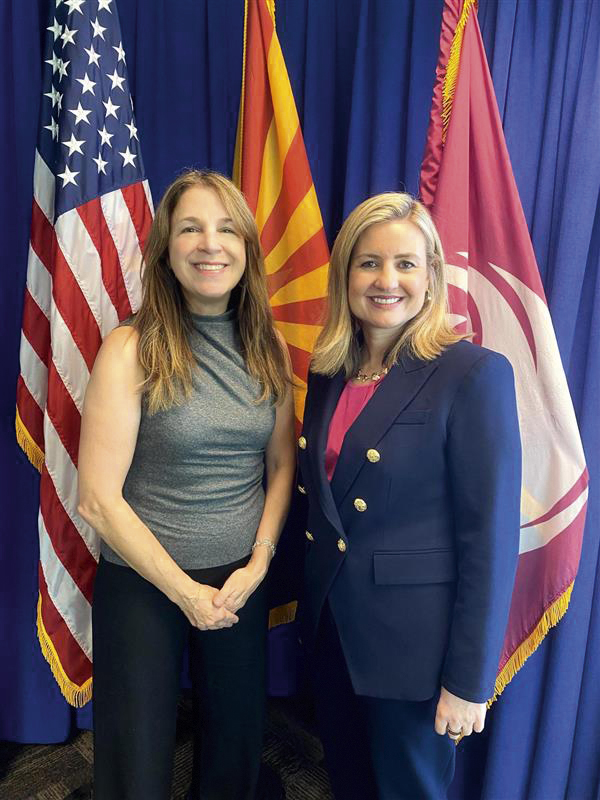
Kate Gallego (right) recently spent time engaging in discussions on advancing Tree Equity in Maricopa County. Phoenix has been a leader in the Tree Equity movement since its 2021 commitment to achieve Tree Equity by 2030 — the first citywide commitment of its kind.
Photo Credit: American Forests
In November, I stood among charred clusters of trees in my home state of Washington — muted crackles sounding from beneath my boots with each step. But as I looked out over the City of Camas watershed, I saw more than just remnants of the 2022 Nakia Creek Fire, which burned nearly 2,000 acres in a matter of hours. I saw hope and recovery. Standing there alongside my colleagues discussing collaborative reforestation efforts amid shifting fire regimes, my gaze focused not on the remaining towering, burnt trees, but on the tiny seedlings budding with new life. There were tens of thousands of them — primarily Douglas-fir — thanks to a web of collaboration. While American Forests secured private funding for the seedlings, we coordinated with the Washington Department of Natural Resources to grow those seedlings, which eventually were planted by AKS Engineering and Forestry — all in collective efforts to help this watershed heal.
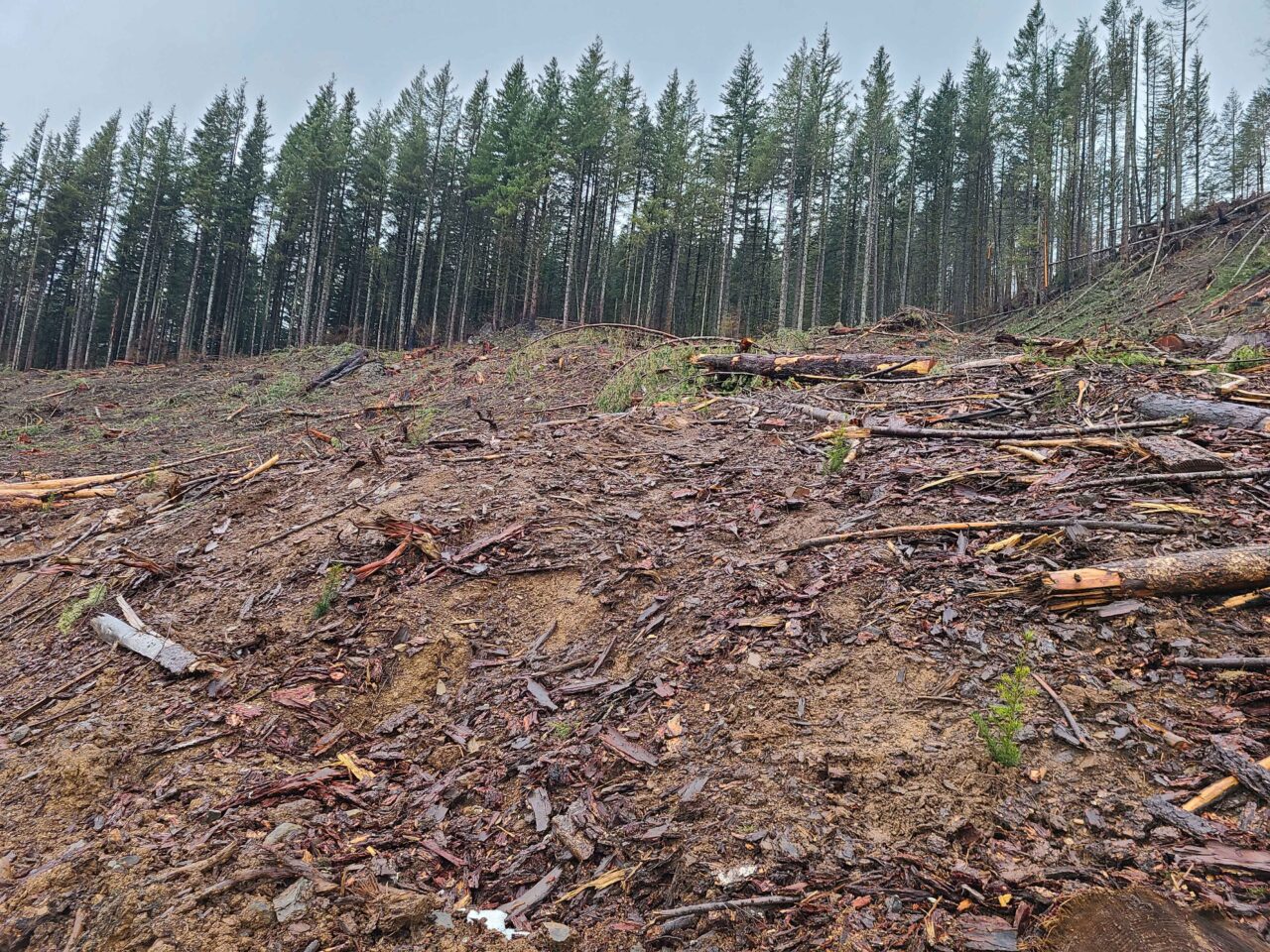
Photo Credit: City of Camas
And in December, I had the privilege of delivering the keynote address at The Understory conference outside of Sacramento, Calif. This event, hosted by our California Reforestation Pipeline Partnership, forged the partnerships we need — among NGOs, academia, private forest industry, public agencies and Tribes — to restore resilience in California’s fire-affected lands. It was two inspiring days of learning and creating solutions that work across boundaries. One shared value rang clear: Replanting after high-severity forest fires is an important tool to address novel conditions and restore local ecosystem services in the era of mega fires. The key to success in these efforts will be sustaining our collaborative momentum.
When we work together, success becomes communal, and so does resilience: From the ecosystem of people working tirelessly to conserve and restore the whitebark pine — gnarled by the harshest of elements in the highest of mountain elevations, yet resilient still — to the municipalities, frontline organizations and faith-based groups driving local action to advance a nationwide Tree Equity movement, to you — our devoted supporters.
Together, we are transforming collective efforts into meaningful, shared and enduring impact. I hope you’ll continue to join us as we drive this progress forward.
For more news and updates from Hilary, connect with her on LinkedIn.