
The rain came fast.
Stormwater funneled down the crevice of Phoenix’s South Mountain, flowing along 16th Street and straight toward Paideia Academy.
Within hours, the surging current began pooling, rising and eventually seeping into the school building and inching into classrooms. By the time Facilities Manager James Tubbs arrived, the campus had transformed.
“I was kind of in shock,” he recalls. “I had prepped sandbags for the doorways, but even that didn’t stop the flooding. That’s how bad it was. It flooded the whole area, probably about 4 or 5 feet of water was just sitting from our bioretention basin all the way up to our door.”
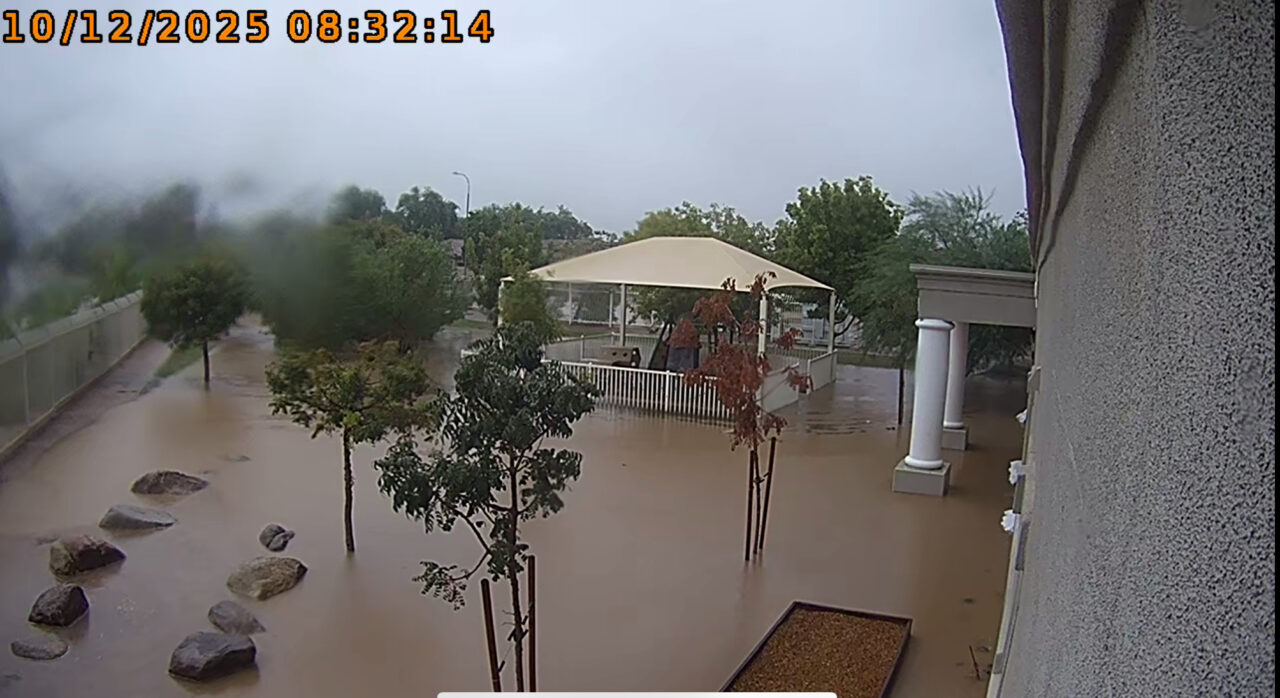
Photo Credit: Courtesy of Paideia Academy
Inside, seven classrooms took on water. Front hallways flooded by nearly a quarter of an inch. Outside, mulch had been swept away and scattered across the campus, completely covering the playground and even reaching surrounding streets.
And yet, what could have been catastrophic simply wasn’t.
Because standing guard — a line of defense along the front of the school — were trees.
Absorbing water and anchoring soil, these sentinels spared Paideia Academy on that Friday night last October, just one powerful example of the many benefits these trees provide to students, faculty and the surrounding community on a daily basis.
The unsung heroes
In the aftermath of the flood, the contrast was striking.
On areas of the property where tree cover was sparse, erosion sculpted visible damage. Soil shifted. Infrastructure took the brunt of the storm.
On areas where trees had been intentionally planted and nurtured, the story was different.
“If we didn’t have trees, it would have just destroyed our building,” Tubbs says. “They helped protect and divert some of the water with their root systems so there wasn’t nearly as much damage as there could have been.”
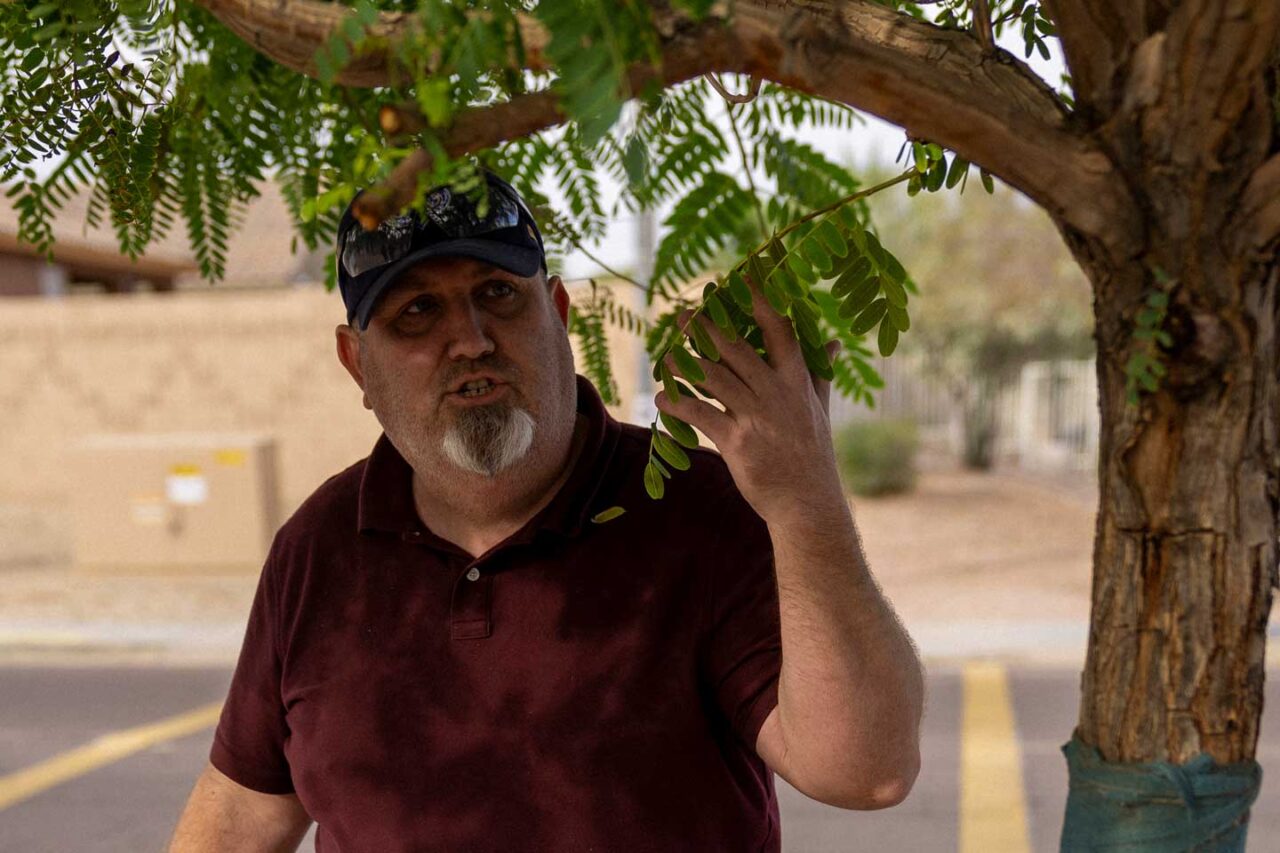
Photo Credit: Quinn Taplin, Drifthouse Media / American Forests
Those roots, mostly invisible in everyday life, held the ground together as water surged across and soaked into it. The tree canopy slowed rainfall. The bioswale, installed alongside and surrounded by trees, absorbed and redirected water.
The result? Water that Tubbs believes would have inundated the entire first floor — 24 classrooms, offices and a gymnasium — was reduced to shallow flooding that was cleaned up before the school bells rang on Monday morning.
The trees had done their job quietly but effectively. It was weekend work unseen by the student body and initially unrecognized by many. For children, consistency and routine provide an important sense of security. The trees maintained that security as student schedules went largely undisrupted — a mulch-covered playground on Monday their sole inconvenience.
A lack of disruption and a sense of security generated by unsung heroes.
Following the flood, the trees grew quickly becoming bigger, stronger and fuller.
For teachers and faculty, what bloomed as a result was a teachable moment and a testament to the core of the school’s design.
A campus designed for more
The trees growing on Paideia Academy’s campus are the result of a larger vision rooted in a careful and intentional design.
In 2012, Executive Director Dr. Brian Winsor founded Paideia Academy with the desire to empower the whole child — body, mind, heart and spirit. Frustrated by the traditional school system’s focus on letter grades, he reimagined what a learning space could be, both academically and environmentally.
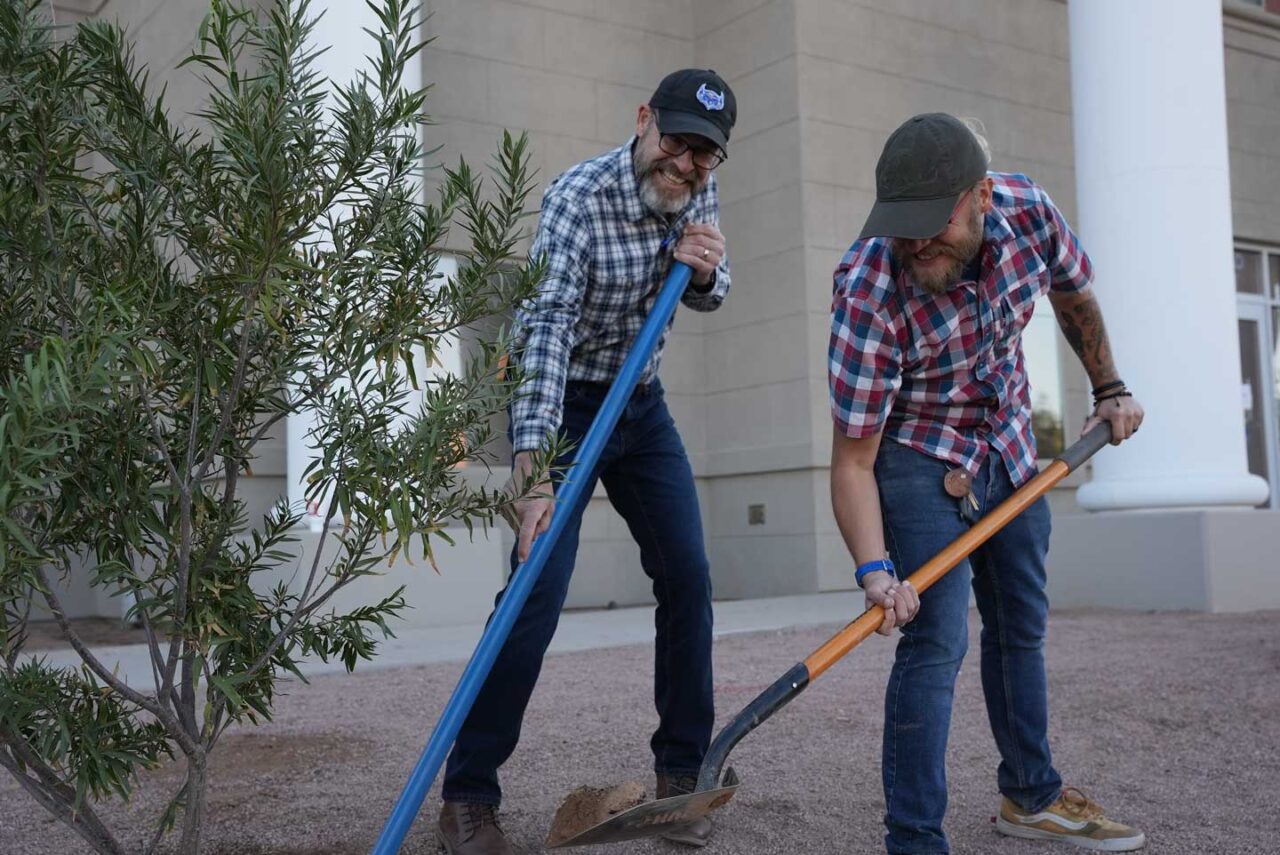
Photo Credit: Jonathan Elias / Paideia Academy
Drawing on his background as an avid outdoorsman, Winsor’s vision for the learning environment was grounded in access to nature.
“I just love nature because I believe it heals the soul,” Winsor says. “So I thought, ‘Why don’t I bring nature here?’”
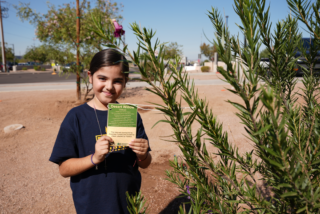
Since 2018, that idea has taken root…literally. With support from an array of partners, including American Forests, throughout a multi-phased process, the school has planted more than 200 trees across its 6.5-acre campus, creating shady pockets lovingly known as the Sanctuary, the South Forest and the Peace Path.

Photo Credit: Jonathan Elias / Paideia Academy
And its efforts continue. Every October, the school hosts a tree planting, and in the spring, Nature Week provides a “spiritual, social, cultural event” that strengthens students’ understanding of and connection to the natural environment.
All too often across the country, school properties appear as bare ground sprinkled with a few easy-to-manage trees. At Paideia Academy, the campus is a living landscape — one, ultimately, much more about function than it is aesthetic.
Shade, safety and the science of schoolyards
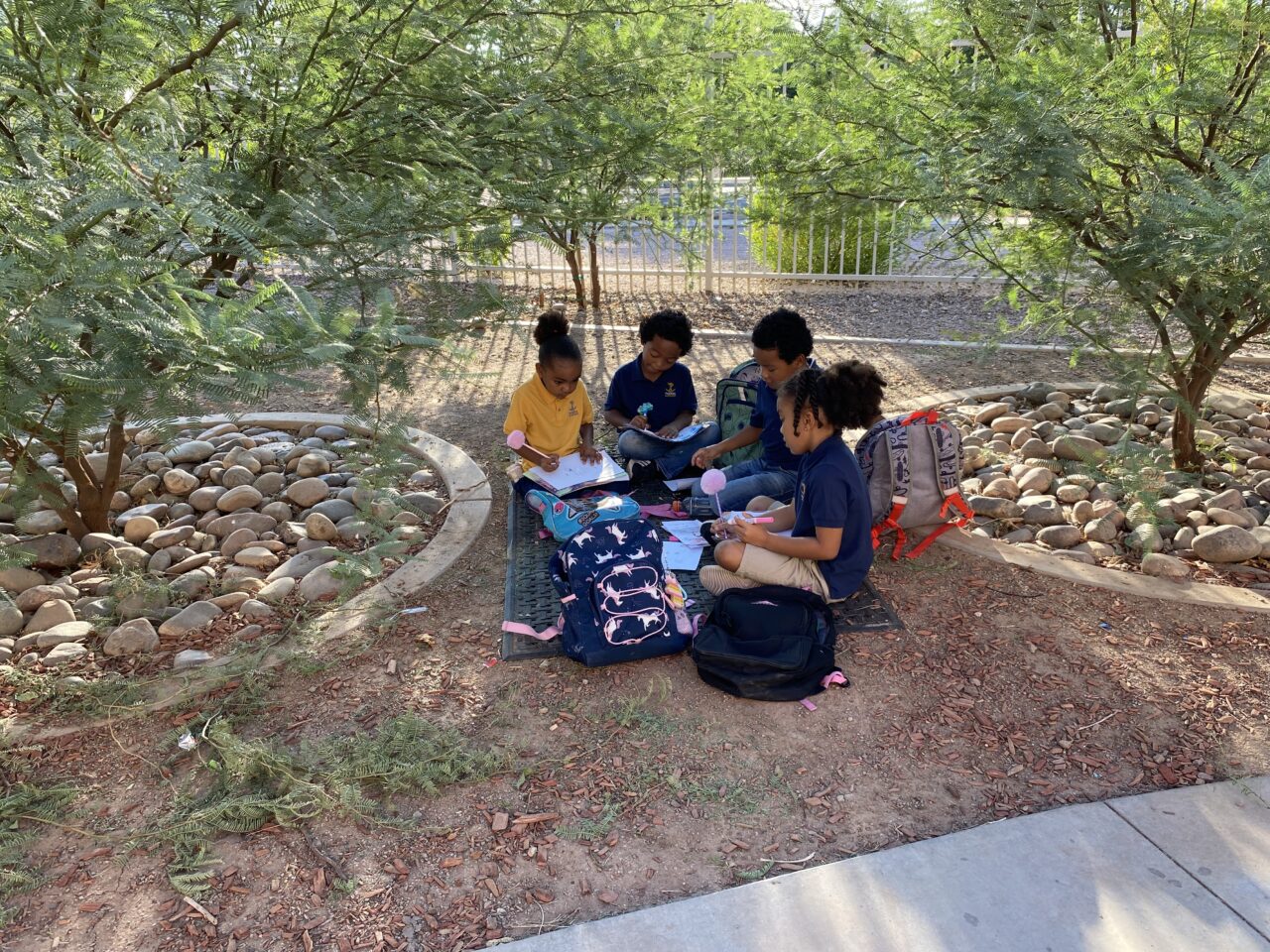
Photo Credit: Courtesy of Paideia Academy
While the October 2025 flood starkly revealed a less-recognized role of trees, daily life on campus is a constant reminder of the keenly felt benefits.
“Trees are crucial not only because of their spiritual aspect, which is part of what drives me to put them there, but also the physical aspect of providing shady spaces,” Winsor says. “I’ve got places on my campus where it’s almost 100 degrees, but underneath all those desert willows, it’s probably 80. We have little shady pockets everywhere of micro-forests for students to enjoy.”
Dr. Jennifer Vanos, an associate professor at Arizona State University’s School of Sustainability, has been studying the impact of Paideia’s evolving landscape since 2018, and was an influential catalyst in Paideia’s initial efforts to expand its natural spaces.
Her research focuses on how trees and green infrastructure shape everything from heat exposure to student behavior to educational connectedness and readiness to learn.
“With this project, we are reimagining the way in which outdoor schoolyards are viewed in terms of how they provide green infrastructure and urban climate management on their properties,” Vanos says. “By doing so, we are able to see benefits in how children interact with and leverage nature…Play spaces don’t have to be barren of natural shade. They can be spaces that are safer than the external urban environment.”
In South Phoenix, where extreme heat and air pollution disproportionately affect communities, this matters deeply.
Trees reduce surface temperatures, improve air quality and create environments where children can safely play, learn and connect. At Paideia, those benefits are instantly visible.
“The kids love the trees; they gravitate to them,” says Tubbs, who is in charge of tree maintenance and is constantly observant of the trees on campus. “The kids are always in the trees. They’re always running around underneath them. Some kids just sit underneath the trees on their lunch break to relax in the shade.”
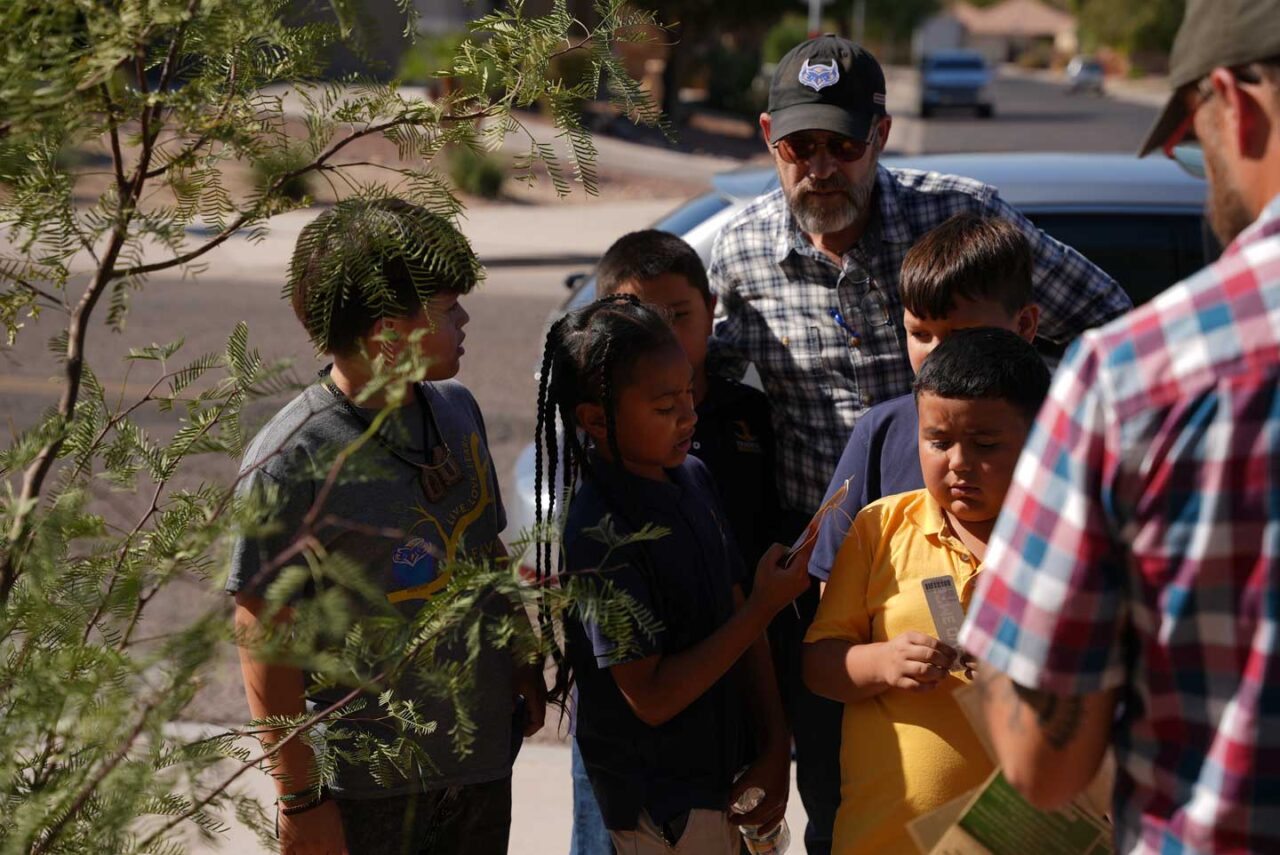
Photo Credit: Jonathan Elias / Paideia Academy
But the trees’ importance for students is more than just an observation. Vanos’ data reinforces it.
Students once clustered under the few available trees, but now they spread across shaded spaces, more active and engaged. These findings show increased physical activity and social interaction as canopy cover has grown.
For Vanos, Paideia Academy has served as an example of the critical value trees provide on school grounds and how they can benefit students.
“It is really motivating to see how much people like Brian Winsor care about their students and their total social and emotional well-being, and how he sees a high-quality outdoor space playing into that,” Vanos says. “It is so easy for schools today to get lost in scores and tests, but they see the bigger picture at Paideia.
Though her research is focused on school grounds, Vanos sees the greater impact the campus’ green infrastructure has on the surrounding community.
It’s been super heartwarming to see how much this school cares about the community,” she says. “It’s not just what happens inside the fences, it’s about what they’re providing for the local community outside and bringing them into the space.”
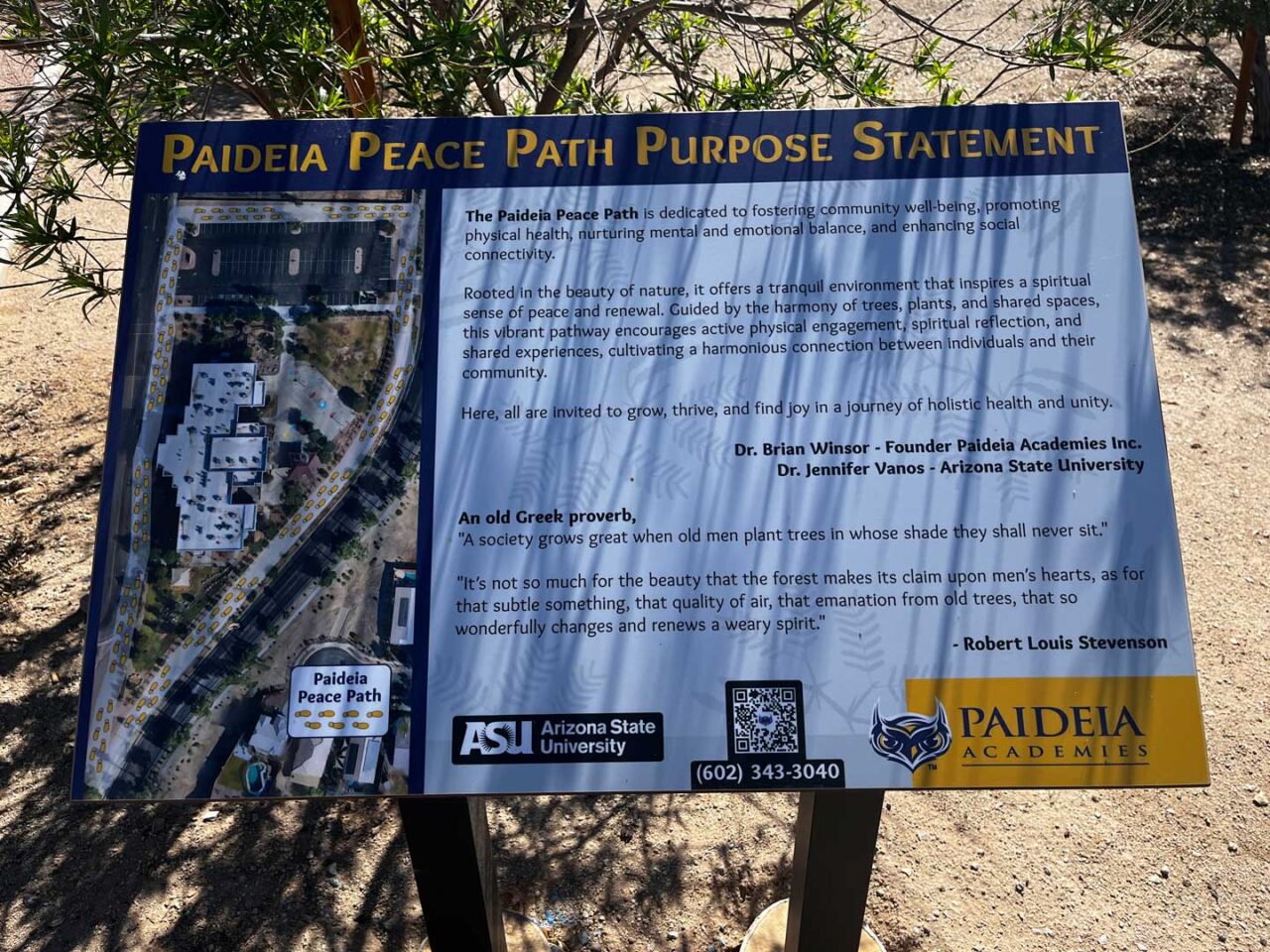
Photo Credit: Courtesy of Brian Winsor
Extending beyond the schoolyard
The benefits Paideia’s trees provide clearly don’t stop at the property lines.
Along the Peace Path, the frontline of trees planted with support from American Forests in 2023, trees provide shade for neighbors, commuters and passersby. Community members gravitate toward these cooler, greener spaces — sometimes stepping off the hot sidewalk just to walk beneath the canopy.
And as a Title I school in historically disinvested South Phoenix, Paideia Academy is providing the benefits of trees to a neighborhood most in need of them.
This is Tree Equity in action: ensuring that everyone has access to the life-changing benefits of trees, regardless of race or income.
“Trees have all these benefits, and these are huge things that help us out,” Tubbs says. “It’s important to plant at schools so the kids get to experience the trees. Whether they’re low income or high income, everybody deserves it.”
The 2023 American Forests’ planting of the Peace Path alone increased the school’s canopy cover from just 5% to 25%. And according to American Forests’ Tree Equity Score Analyzer for Maricopa County, that increased canopy raised the entire neighborhood’s Tree Equity Score to 87.
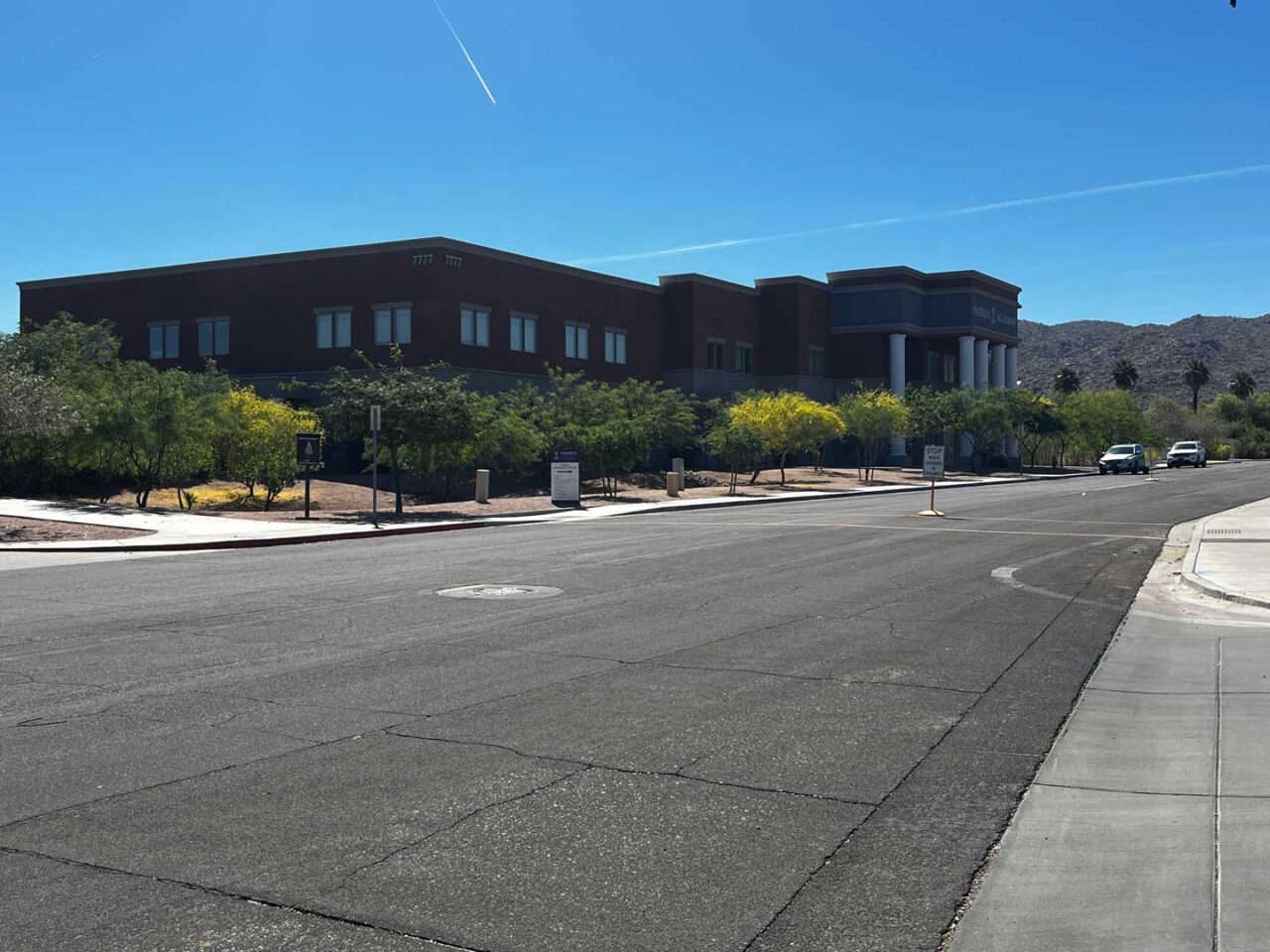
Photo Credit: Courtesy of Brian Winsor
And that impact on the broader community is part of Winsor’s vision.
“It’s the interface with the community,” Winsor says of the Peace Path. “I want to say, ‘community, we love you, too. Walk our peace path so that you’ll feel cooler and you’ll feel the peace that nature brings.’”
Growing forward
The flood of October 2025 could have been a breaking point. Instead, it became a proof point.
Proof that trees are more than scenery. They are critical infrastructure: living systems that protect, heal and sustain.
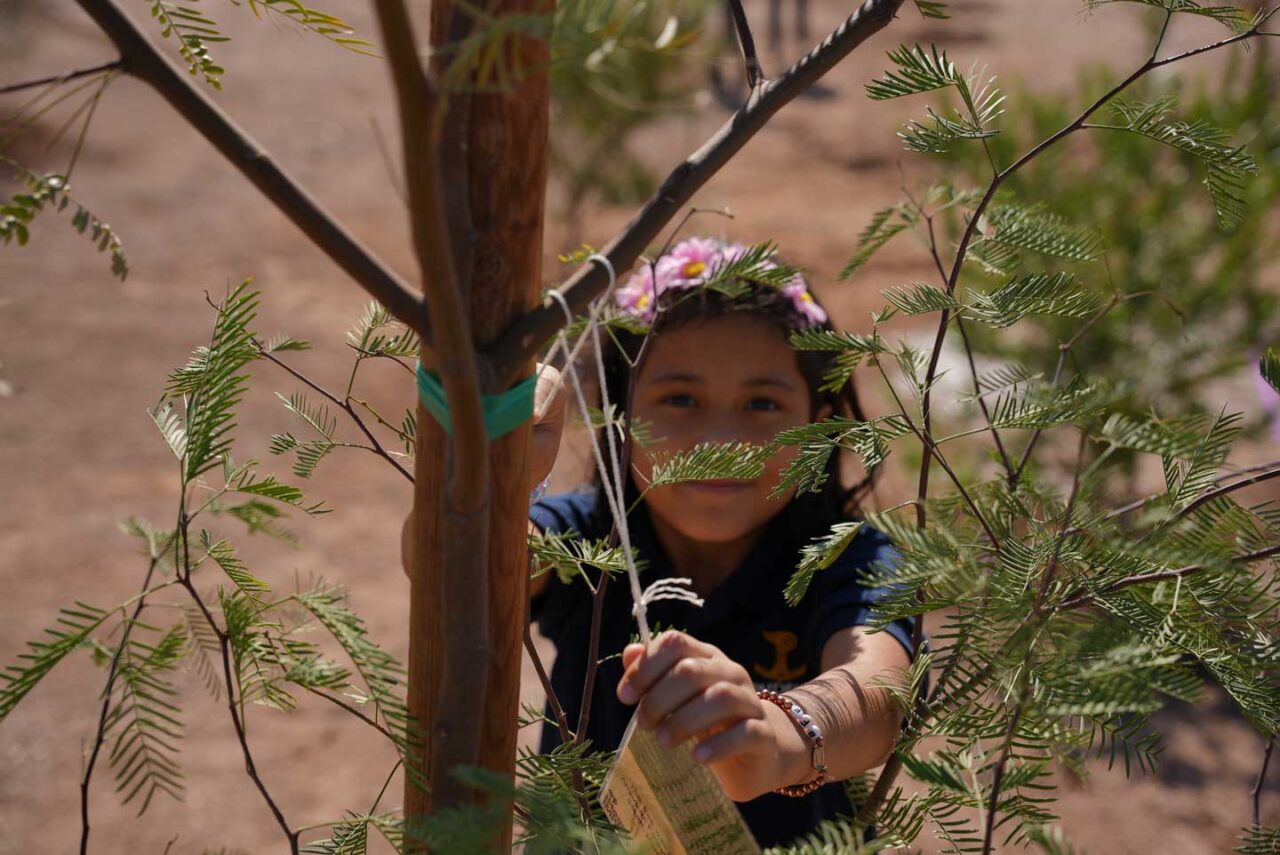
Photo Credit: Jonathan Elias / Paideia Academy
At Paideia Academy, they’re also teachers. They show students how to care for something beyond themselves. They demonstrate resilience in the face of storms. And, perhaps most importantly, they quietly ensure that learning can endure, even when the waters rise.
For Winsor, that legacy is clear.
“I think it’s a part of Paideia that is my most proud legacy to leave,” Winsor says. “I’ll be gone and forgotten, and those trees will still be there.”