
Growing up in Richmond, my first introductions to the late Congressman, the Honorable A. Donald McEachin, were the many commercials for his law firm, McEachin and Gee. Seeing attorneys who looked like me on television instilled a sense of pride at a time when the predominant images of Black Americans still seemed largely focused on negativity. As I progressed in my career, I was also inspired by Rep. McEachin’s early leadership on environmental and climate justice. I’m proud that I’ve been able to work with his office to advance Tree Equity, workforce development and other policies to improve our most vulnerable neighborhoods, in Richmond and beyond.
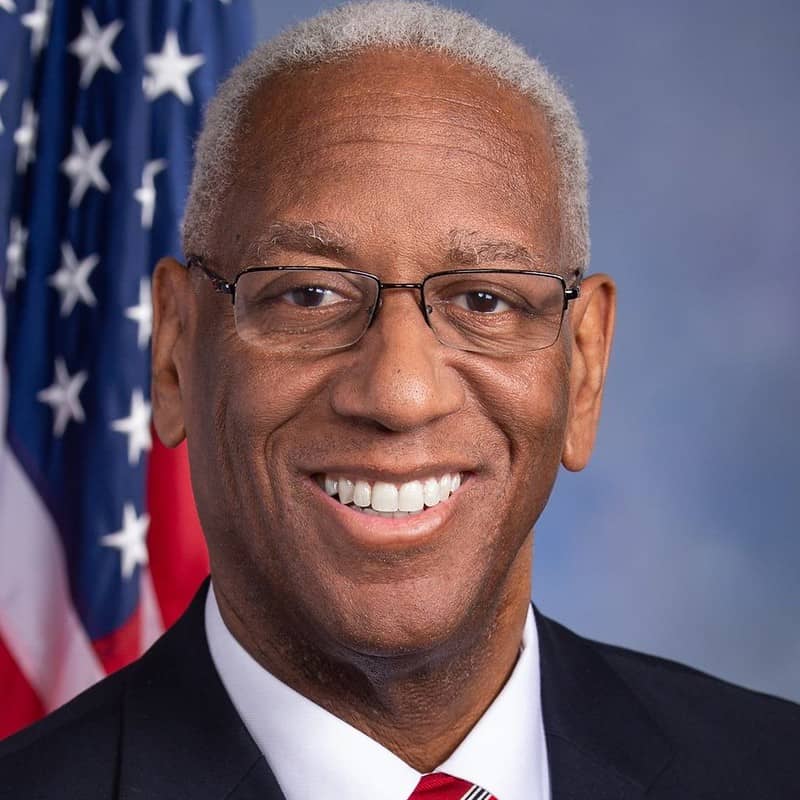
Aston Donald McEachin, a lawyer by trade and a Virginian by birth, began his rise in politics in 1995. He won his first election to the Virginia House of Delegates when I was a student of state delegate Kirk Cox, who at the time was also a high school government teacher. Mr. Cox — who would eventually become the state Speaker of the House — led a month-long mock state assembly, in which I held Mr. McEachin’s seat, representing the city of Richmond.
But the similarities span farther than our shared city or career paths: In his high school days, Mr. McEachin was a star player at St. Christopher’s School, whereas I spent countless hours in the summer playing pickup basketball. Most of the time, these games were held on the courts of my suburban neighborhood park, Rockwood, well-known for some of the best hoops competitions in the metro area — as well as for its abundance of trees and trails.
My friends and I would sometimes venture into city limits to play, and we would often be told, “You county boys can’t take the heat in the city.” At the time, I took it as trash talk among teenagers and young adults on a basketball court. I wasn’t yet thinking about urban heat islands and the fact that it literally WAS hotter in the city, due largely to the relative lack of trees.
It’s one thing to experience heat while running up and down a blacktop. It’s quite another to live day-to-day in neighborhoods that are hotter, more polluted, more prone to floods and facing systemic, environmental and economic justice issues that severely impact quality of life. It’s something that both I and Mr. McEachin centered our careers upon rectifying.
Mr. McEachin served in the Virginia chambers for two decades before running for national office, where he dutifully represented the people of the fourth district of Virginia for more than five years. He had just won re-election in November before his untimely passing, and we were all looking forward to him continuing his illustrious leadership for years to come. It’s impossible for me to overstate the incredible, lasting effects of his work to advance climate justice throughout his career.
Rep. McEachin sat on three committees — the House Energy and Commerce Committee, the Natural Resources Committee, and the Select Committee on the Climate Crisis — but he was also a proud member of the Congressional Black Caucus and centered Black, Indigenous and People of Color throughout his career, making lasting differences for Virginians and communities across the nation.
Representative McEachin understood the urgency of our climate crisis and championed environmental justice to improve quality of life for all Americans. He introduced a constitutional amendment to affirm that we all have a right to clean air, pure water and ecological integrity and recently co-sponsored and co-wrote the comprehensive Environmental Justice for All Act, which would ensure every American can live in an environment conducive to a healthy, successful life. He believed that “federal policy can and should seek to achieve environmental justice, health equity and climate justice for all underserved communities,” including outdoor access, within this proposed legislation.
His leadership on the Inflation Reduction Act of 2022 and annual appropriations of the U.S. Forest Service’s Urban and Community Forestry Program will transform neighborhoods — both urban and rural — permanently. Through his ardent defense of urban and community forestry provisions throughout his career, we all will have a greener, cleaner, safer and more equitable future.
We have lost a true champion of environmental and climate justice. But the legacy of his leadership will continue to have lasting effects in my hometown, in Virginia and across the nation, creating a better tomorrow for all of us.