In 2018, the people of Goshen, Ind., experienced a historic flood, one that Mayor Gina Leichty describes as a 1-in-500-year event. For a city shaped by manufacturing, rail lines and hard infrastructure, the flood exposed just how vulnerable the landscape, and the city, had become.
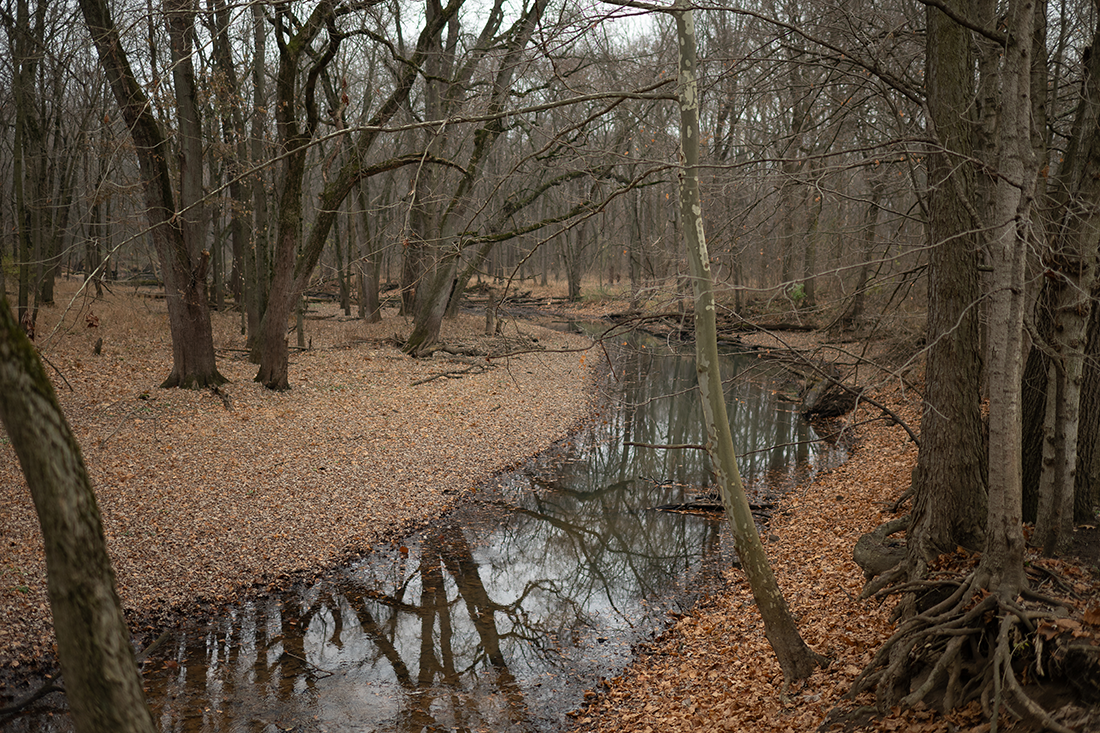
Photo Credit: Emily Allison / American Forests
Kendel Martin, an urban forester for the City of Goshen, has spent much of his life working in and around the city after moving there for college in the 1980s. He remembers the cacophony of elements that lead to the 2018 storm clearly.
“We had just gone through a cold spell below zero, and the ground was frozen solid,” he recalls. “There was quite a bit of snow on top of that. Then it warmed up drastically into the 50s and 60s, and instead of snow, we got rain for several days on end. And that water just had nowhere to go.”
The flood waters continued to rise before entirely submerging areas, leaving lasting damage to buildings and homes while leaving the community devastated by its impacts.
For Goshen, it was no longer practical to respond to emergencies as they came. The city needed to think differently about land use, future flooding and long-term resilience.
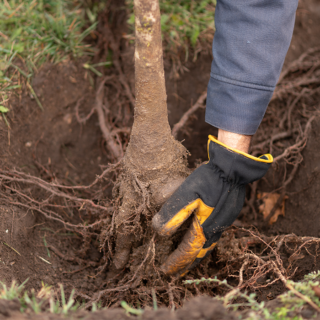
Trees became a key part of the solution through a long-term effort guided by a holistic strategy, and with funding and technical support from American Forests, the City of Goshen is expanding their program to advance the city’s urban forest through a full-cycle approach to tree care.
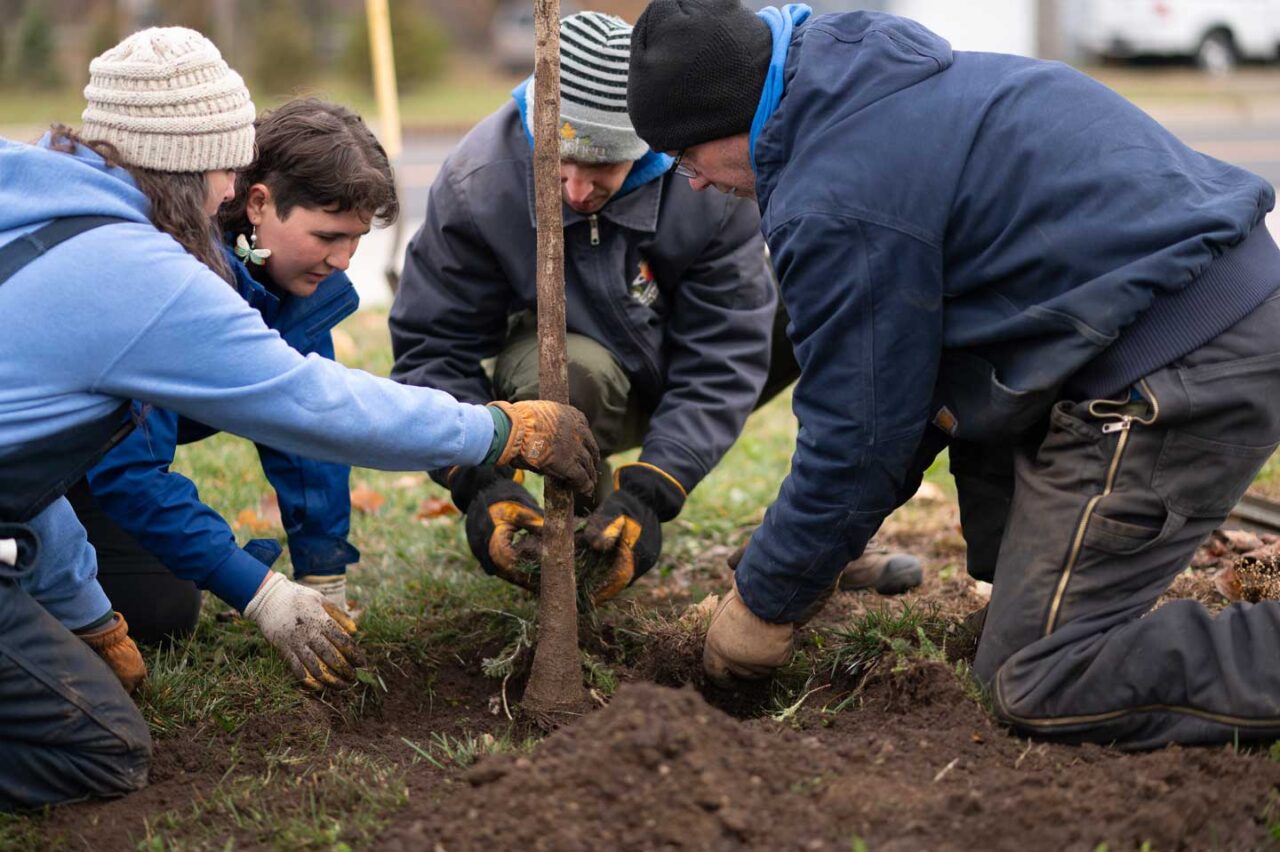
Photo Credit: Emily Allison / American Forests
A municipal response, shaped by community advocacy
Goshen is nestled in Elkhart County, part of one of the most robust manufacturing regions in the country. Recreation Vehicle factories, industrial parks, transportation corridors and rail lines has shaped how land is used and developed. Much of the city’s growth has been driven by the needs of a working economy, leaving limited space for natural systems to function at scale.
Aaron Sawatsky-Kingsley was one of Goshen’s first urban foresters and has been helping the city understand and navigate how trees survive and struggle within an industrial landscape. As conversations about the flood deepened, he saw attention turn to how trees could play a role in strengthening environmental resilience.
Rather than continuing to see trees as amenities that compete with growth, staff and residents began to see trees as infrastructure, essential to managing water, reducing heat and supporting long-term public health in an industrial city.
That shift in thinking embodies the heart of a broader, nationwide movement for Tree Equity — the belief that all communities deserve access to enough trees to support people’s health, safety and well-being — from cooler temperatures and cleaner air to stormwater management and improved health outcomes.
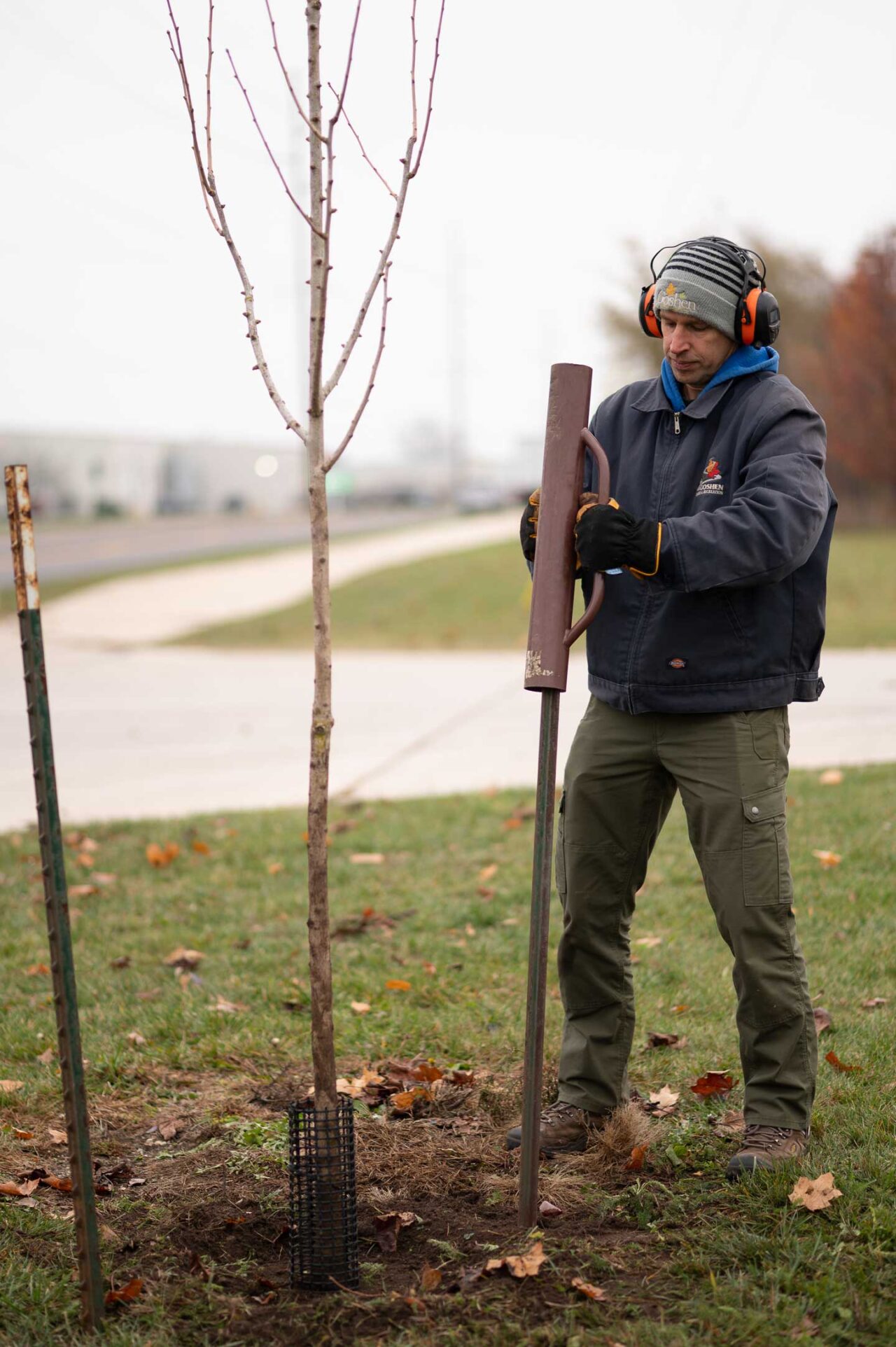
Photo Credit: Emily Allison / American Forests
By 2020, those students’ ideas came to life. Goshen created the Department of Environmental Resilience, and Sawatsky-Kingsley was asked to step into the director role carrying forward the work he had already been doing, now with a mandate to plan for trees, water and climate impacts over the long term.
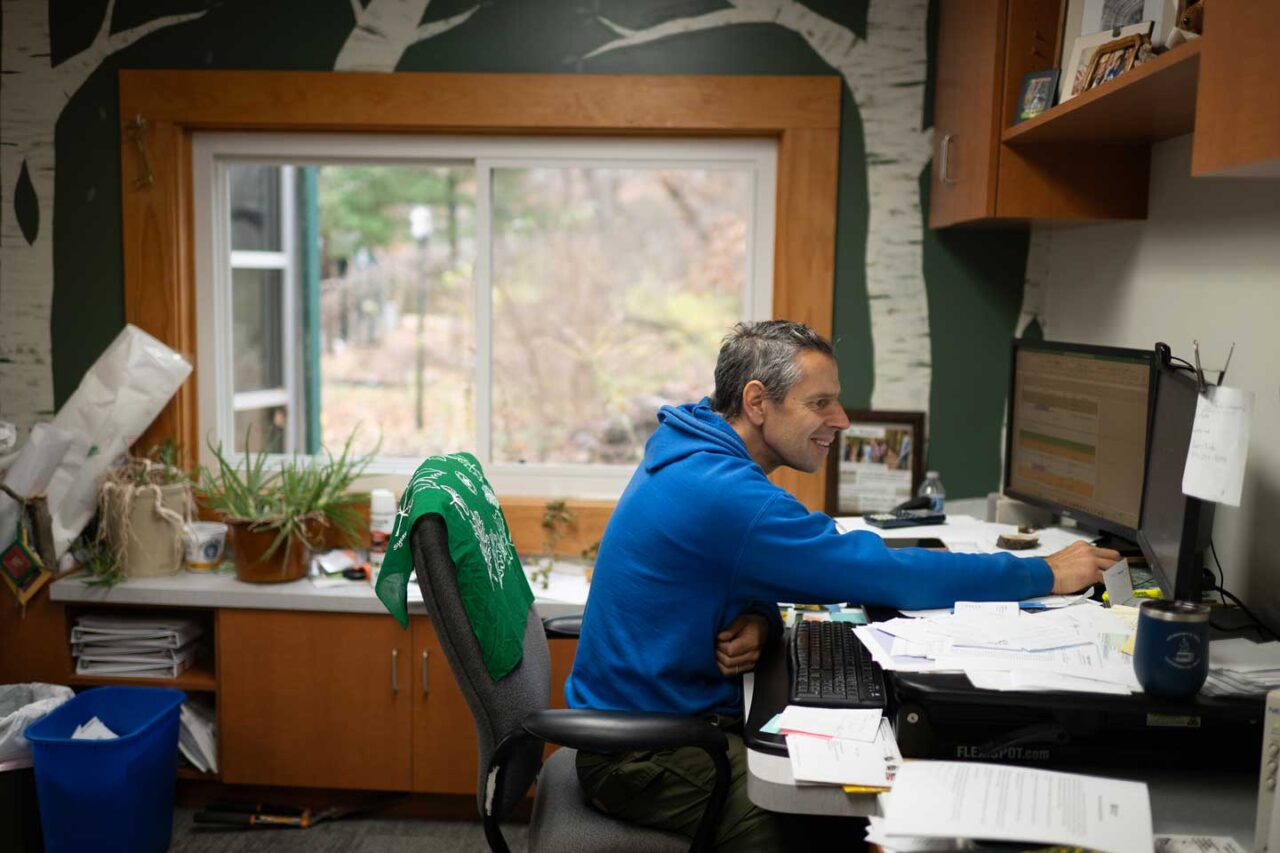
Photo Credit: Emily Allison / American Forests
Goshen’s full-cycle approach to tree care
As part of the effort to advance Tree Equity, Sawatsky-Kingsley and his team have adopted a long-term goal to increase its tree canopy from roughly 22% today to 45% by 2045.
“It’s a large enough goal that in some ways it is an aspirational challenge, but we are also working at measurements, at metrics, that help us to see that we are actually moving incrementally towards that goal,” Sawatsky-Kingsley says. “And we know that as our urban forest grows…the benefits that canopy is generating will also increase.”
However, Sawatsky-Kingsley and his team realized that reaching that goal requires more than planting trees; it requires systems that ensure trees survive, mature and deliver benefits for generations. To achieve its goal, Goshen has developed a full-cycle, municipality-led approach to growing its urban forest — from tree supply and planting to long-term care and maintenance.
Rather than relying solely on external suppliers, the city grows many of its trees locally through municipal nurseries and gravel beds, ensuring reliable access to a diverse range of species suited to Goshen’s landscape and long-term needs. Species diversity is prioritized to reduce vulnerability to pests and disease and increase the ability to respond to local conditions. It also ensures a steady tree supply so that the city can plant consistently. Planting strategies are coordinated with flood-prone areas, industrial corridors and neighborhood needs.
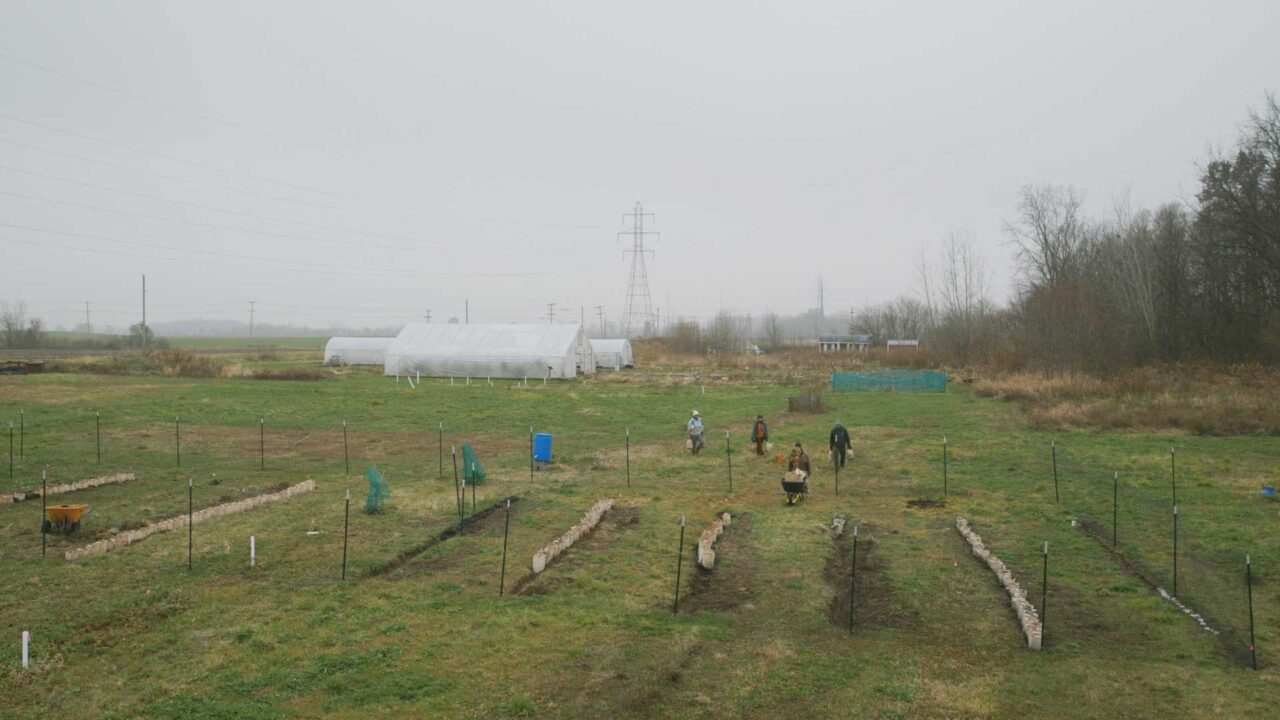
Photo Credit: Olivier Sarbil / American Forests
Crucially, planting is paired with long-term maintenance and monitoring, recognizing that simply getting trees in the ground isn’t enough if they don’t survive long enough to matter.
“Maintenance is often an overlooked aspect of creating a canopy plan,” Sawatsky-Kingsley says. “Where we have mature canopy in place, that’s the real muscle, the real backbone of our canopy. And if we can help extend the life of the canopy that is already here, that pushes us even closer to that goal across time.”
Alongside long-time city foresters like Martin and Sawatsky-Kingsley, Melanie Helmuth is part of the next generation helping to carry forward Goshen’s full-cycle approach to tree care. Trained in theater at Goshen College, Helmuth didn’t originally imagine a career in urban forestry, but she found her way into the work through groundskeeping jobs that kept her outdoors and connected to the city after college. She later took the Indiana Master Naturalist course and began volunteering with the Goshen Shade Tree Board, a path that led her into her current role as an urban forester supporting the city’s long-term tree canopy goal.
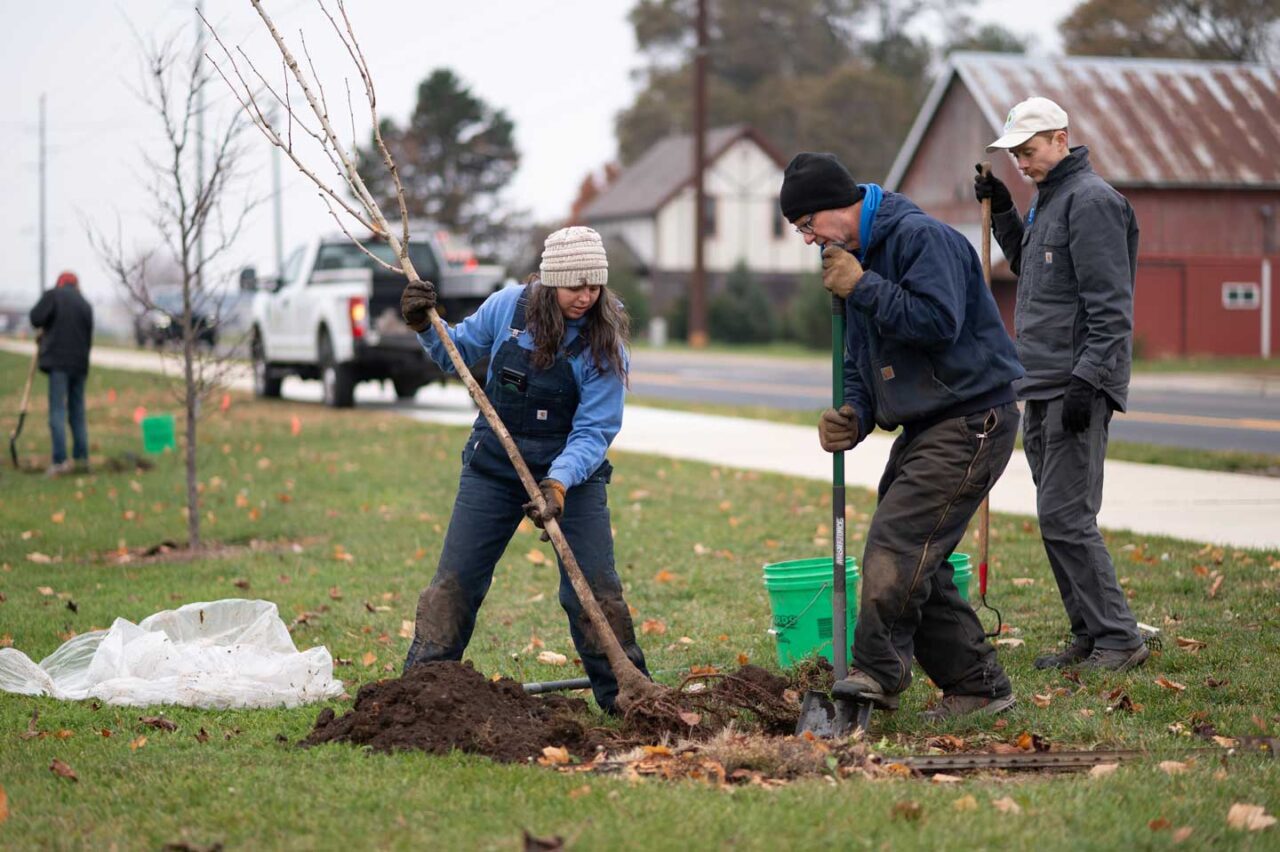
Photo Credit: Emily Allison / American Forests
A lot of people love the idea of a tree,” Helmuth says. “But the hard thing for a lot of people is the maintenance… having to also care for it, that can make people nervous.
That gap is one the city recognized it could not address through procedures alone. To build and maintain canopy at scale, Goshen needed people with the skills and commitment to stay with the work.
To meet that need, the city has launched a county-wide arboricultural training program, supported by American Forests’ Catalyst Fund, which provides funding and technical support to help students gain hands-on experience in planting and tree care. The program is delivered in partnership with local organizations, including The Crossing School of Business and Entrepreneurship, Mennonite Men and Bushelcraft Farm, and is helping build the local capacity needed to sustain Goshen’s full-cycle approach and continue progress toward its goals.
One of those trainees is Christian Lopez, who joined the program through his faith- and work-based learning school, after a staff member encouraged him to give it a try.
“I didn’t know there were people that worked like that, that trim trees to keep them healthy,” Lopez says. “I didn’t realize there were people that monitor the trees that are planted.”
For Lopez, the program introduced him not just to arboriculture, but to the idea that he can have a role in caring for the systems that keep his city functioning.
For the department, realizations like this illustrate why workforce development is essential, so the knowledge and responsibility of caring for the city’s natural infrastructure can be passed from one generation to the next.
As Goshen keeps its goals in sight, Sawatsky-Kingsley is reminded of what truly lies at the heart of the work:
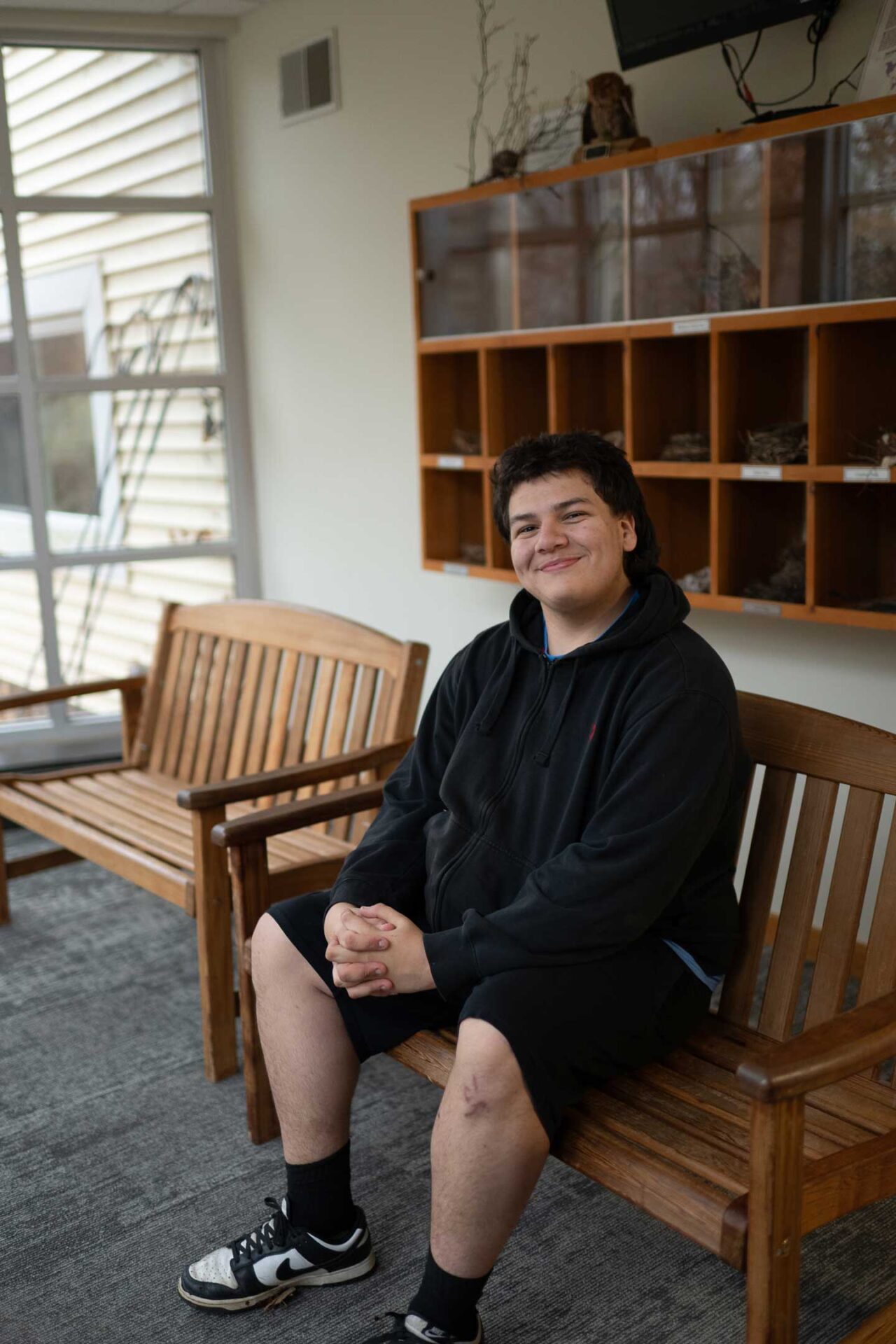
Photo Credit: Emily Allison / American Forests
“Your place is your home, and it deserves your care,” he says. “And if you love your place, your neighbors, your family, then you plant a tree because you may never benefit from them, and you may never know who’s going to benefit from them, but somebody will.”