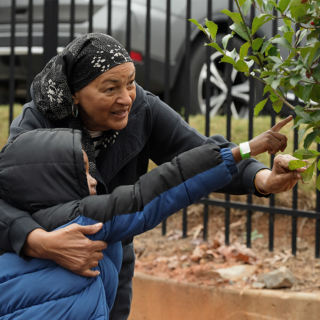
After a particularly stressful day at work, Sister Terri Ali stepped into her backyard, dug her hands into the soil, and gently tended to her garden, a place that grounds her.
Her garden began simply with rows of vegetables, and as she continued to nurture it, she eventually expanded to fruit trees. Before long, her harvest was more than she could contain alone. She reached out to Mohammed Schools of Atlanta, an Islamic school system founded by the Atlanta Masjid of Al-Islam, the largest and oldest Islamic community in Metro Atlanta.
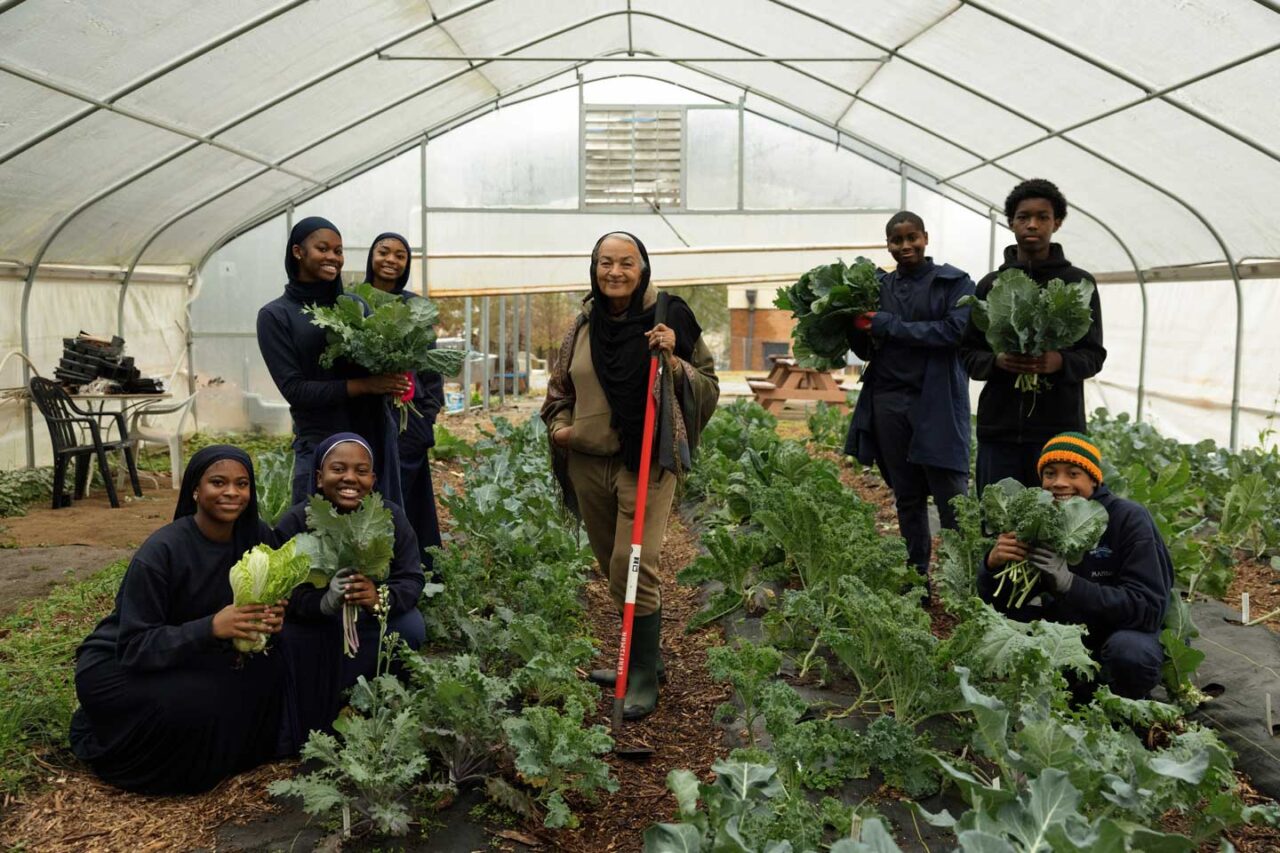
Photo Credit: Steve Swisher / American Forests
She asked if she could bring her burgeoning garden to the school. The quick answer was yes.
The garden has since grown into a USDA-certified farm where Sister Ali works with the students to maintain it and grow food for the cafeteria. Beyond food production, the farm is about forming a care ethic and teaching students that stewardship is a lived responsibility. In Sister Ali’s view, environmental stewardship is about helping students and the community understand the balancing act of how “we live with the Earth, what we take from the Earth and what we give back into the Earth.”
In recent years, that ethic has expanded into tree plantings and canopy growth at the Atlanta Masjid through a partnership with Georgia Interfaith Power & Light (GIPL), a statewide faith-based environmental nonprofit working to equip congregations with practical climate solutions, and with support from American Forests. What’s happening at the Atlanta Masjid is not an isolated story, but part of a growing statewide effort to turn faith into action and expand tree canopy in neighborhoods that need it most.
Rooting Tree Equity in faith
Faith-based action is key to advancing Tree Equity, the vision that all communities deserve access to enough trees to support people’s health, safety and wellbeing.
Hannah Shultz, program director at GIPL, has spent years helping congregations translate faith into climate action. Founded in 2003, GIPL works across Georgia to organize green teams in communities to help them implement practical climate solutions, from energy efficiency to tree planting.
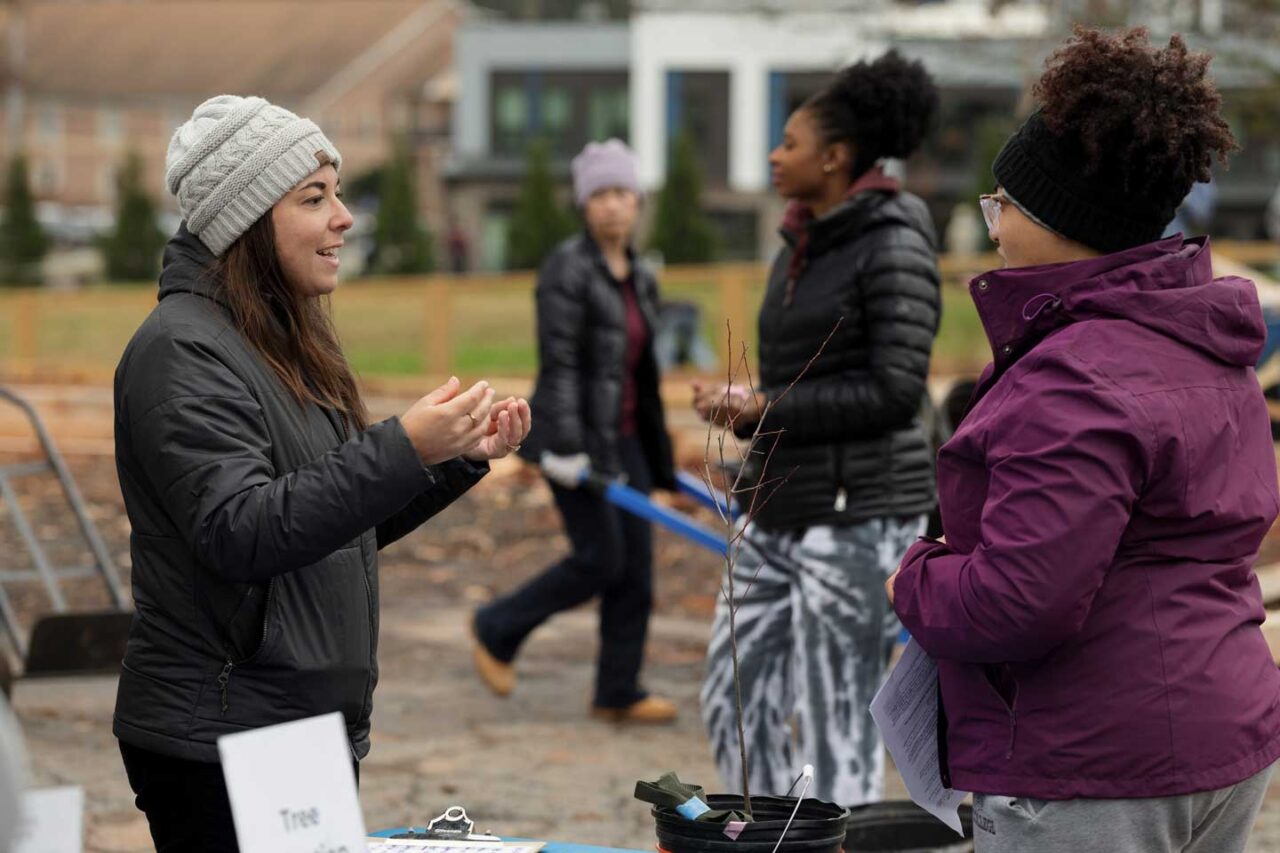
Photo Credit: Steve Swisher / American Forests
Shultz says it has long been a dream of hers to live more connected to the land and the food she eats. Through her work at GIPL, she helps faith communities cultivate that same connection as both an environmental practice and a spiritual one.
“Almost every major faith tradition has an ethic of caring for the natural environment and an ethic of justice,” she says. “We can’t love each other well if we’re not caring for the environment around us because these two things are directly connected.”
In recent years, that ethic has taken shape through GIPL’s ReWilding program, which supports congregations’ sustainable land use — planting trees, establishing pollinator gardens, expanding local food production, restoring native ecosystems and increasing canopy in communities that have historically lacked environmental investment.
“Everyone loves trees,” Shultz says. “It’s been a great way to engage new faith communities that maybe are not as well versed in climate issues. Trees are tangible; people feel connected to trees.”
Through American Forests’ Catalyst Fund, GIPL receives project funding and technical support that strengthens their ReWilding efforts, including the tree plantings at the Atlanta Masjid and Mohammed Schools.“One of our five core values at GIPL is justice,” Schultz says. “We believe that everybody deserves to live in a community that is safe and healthy, and we’re really excited to be able to give trees to communities that have not been invested in and to help kind of expand that tree equity across our city.”
Planting for protection
For Stephanie Williams, what it means to live in a safe and healthy community hits close to home. Williams is GIPL’s development manager and a member of the Atlanta Masjid community.
When she looks at the paved parking lots that surround the Masjid, she sees both a challenge and an opportunity. At the Atlanta Masjid, the dedicated place of worship and gathering, much of the surrounding space is paved into parking lots to accommodate the more than 1,500 worshipers who gather each Friday, and at times, those paved spaces are even used for prayer. In the summer, the asphalt traps heat.
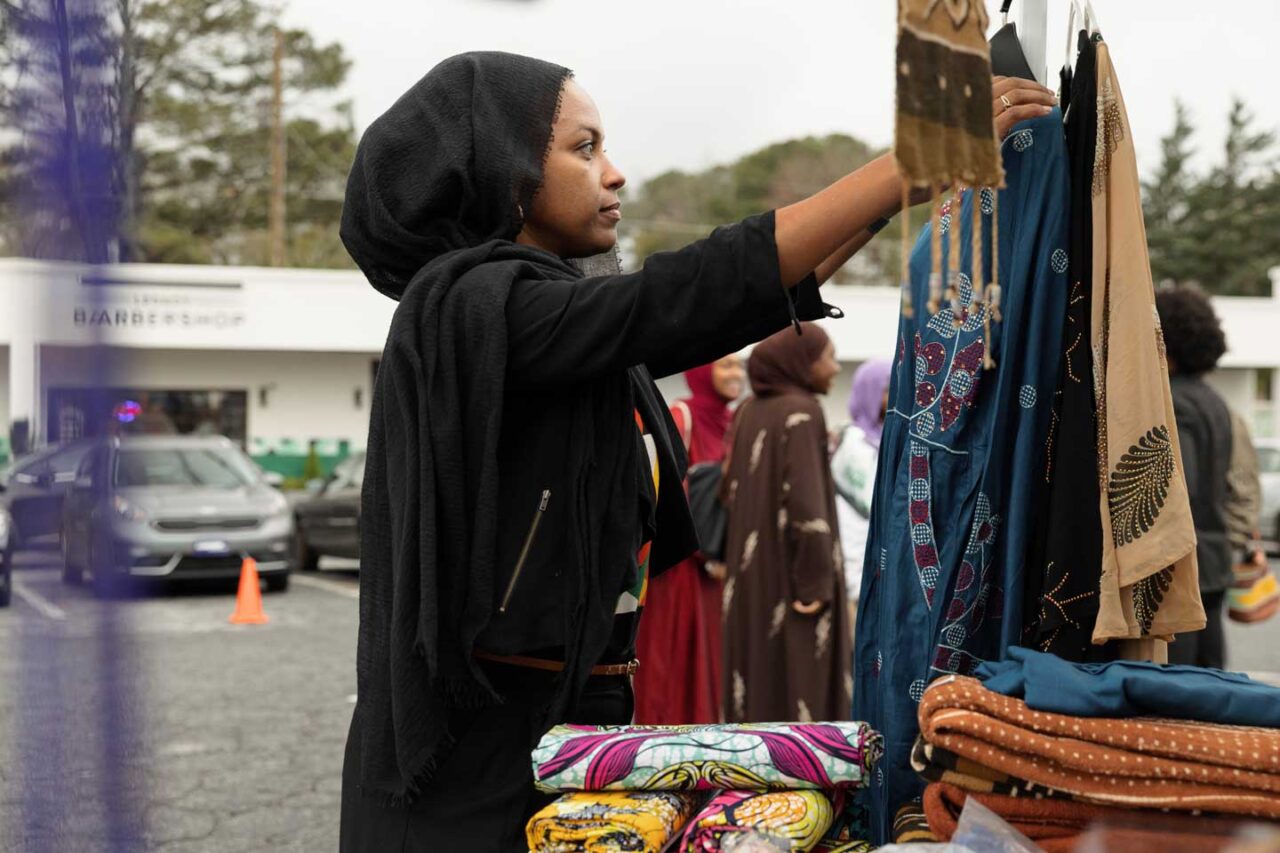
Photo Credit: Steve Swisher / American Forests
That reality of rising temperatures, limited shade and uneven tree canopy is what Williams hopes to address at GIPL.
“A lot of our spaces are full of parking lots,” she says. “And in the summer, those parking lots get really hot. I hope these trees grow and give us more shade — a place to sit under, have a meal, pray.”
Healthy communities are important to Williams for personal reasons, too. Her son is a student at the Mohammed Schools and is among the 1 in 12 Americans with asthma, which can be triggered by air pollution and other environmental factors.
“My oldest son, he has asthma, and I hope that these trees purify the air for him,” she says. “I hope that he is not plagued by chronic asthma for the rest of his life… he understands air quality affects him.”
Williams is encouraged by knowing her work makes a difference for him and communities across Georgia.
“What I’m most passionate about is getting the resources to communities to do this work,” she says. “I think that communities are perfectly capable of fulfilling their faith obligations towards Creation if they’re given the resources. And so that’s where my work comes in at GIPL.”
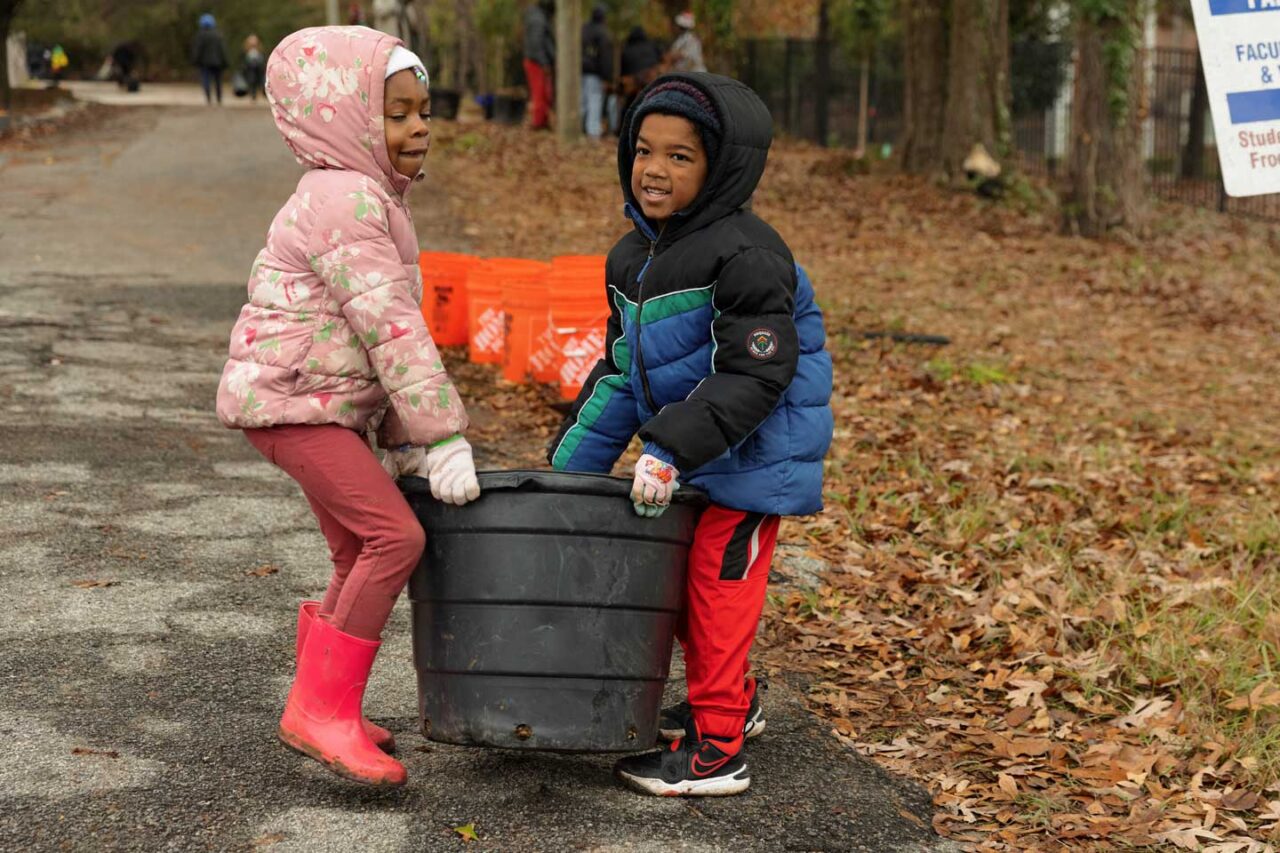
Photo Credit: Steve Swisher / American Forests
But for Williams, the goal extends beyond improving air quality or reducing heat to a hope for future generations.
“I hope that my children will take from this experience at the Mohammed Schools and tree plantings, that the environmental work that our community is doing is holistic,” she says. “And when someone asks them, what are you doing for the environment, they’re puzzled that anyone would even ask them that question because it’s just part of who they are.”
Called to care
Within the Atlanta Masjid, that sense of stewardship is shared across generations and roles, and Imam Sulaimaan Hamed is among those carrying that responsibility forward. He has served as the Resident Imam of the Atlanta Masjid of Al-Islam for over a decade and sees the school and Masjid as an extension of the community.
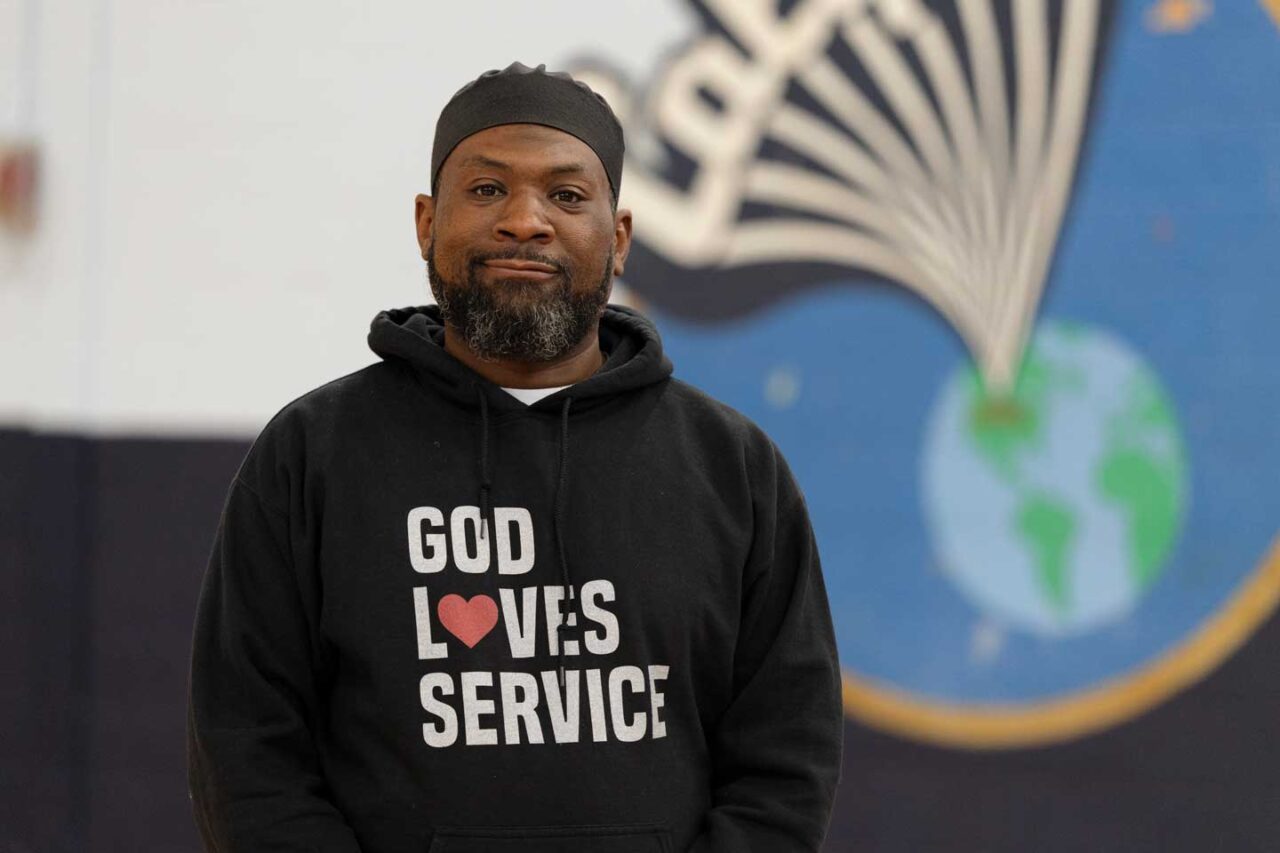
Photo Credit: Steve Swisher / American Forests
For him, the tree plantings at the Masjid, in collaboration with GIPL, are not just environmental work. They reflect faith in action and the community’s continued growth through fruit trees that can feed families and natural spaces that people can benefit from.
He points to a core teaching in Islam that shapes that action — the call to be “Khalifas.”
“One of the definitions [of Khalifa] is caretaker or custodian. For a Muslim, we understand that we are to be caretakers of the Earth that God put us in charge of,” Imam Hamed reflects. “We have to be stewards of the environment because God trusted us to be in this environment. He trusted us to be over the water, the animals and the trees.”
For Imam Hamed, that trust is lived out in classrooms, in gardens and in the newly planted trees lining the parking lot, providing a promise of shade where there is now only heat. It is faith made visible in canopy and cleaner air.
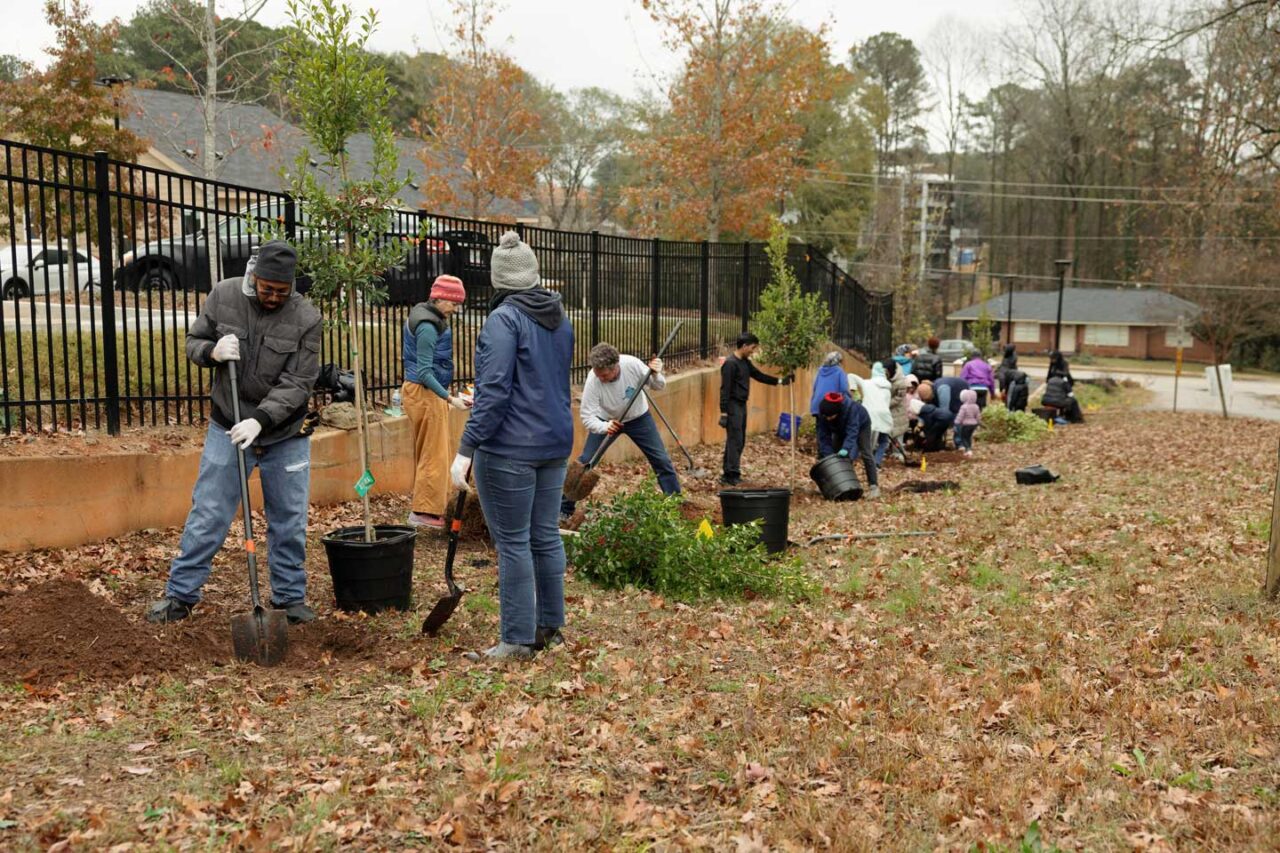
Photo Credit: Steve Swisher / American Forests
Across the country, communities like Atlanta are confronting rising heat, poor air quality and limited access to shade, green space and affordable, healthy food — often with unequal tree canopy compounding those challenges. The Tree Equity movement is a commitment to close that gap in every neighborhood.
For GIPL, the Mohammed Schools and the Atlanta Masjid, Tree Equity grows from faith. It grows from the belief that caring for the Earth is inseparable from caring for people and that when you plant with intention, what flourishes benefits everyone.