
Every April organizations and individuals alike join to celebrate Earth Month. But when your mission is forest conservation, Earth Month is every month. Check out some major accomplishments American Forests and our partners achieved over the last year.
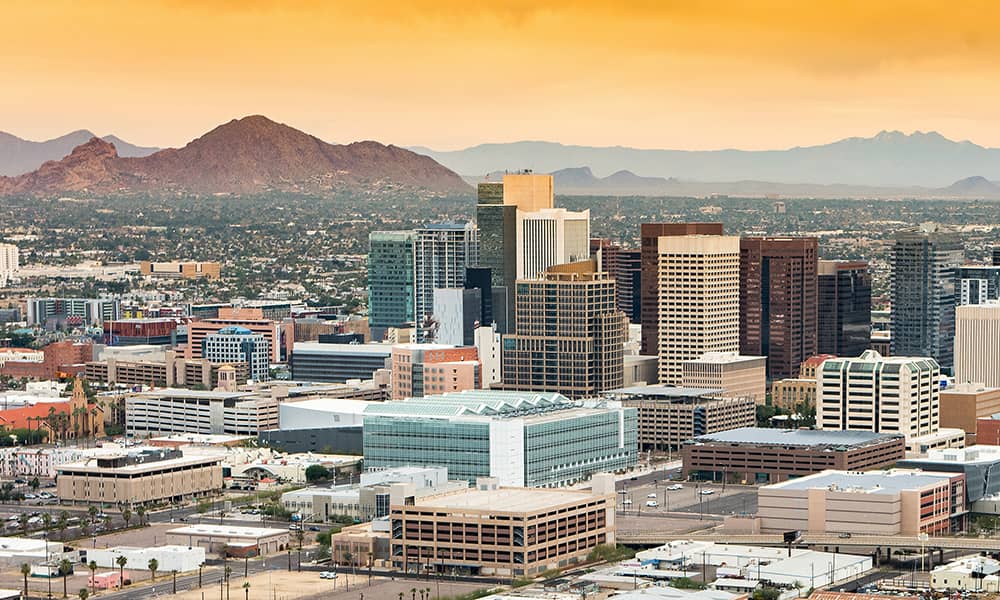
Photo Credit: Mark Skalny / Adobe Stock
April 2021
Urban heat is on the rise. Thankfully cities like Phoenix, AZ, are using the power of trees to turn down the temperatures, slow climate change and protect their citizens. In April 2021, the Phoenix City Council became the first local government entity in the U.S. to vote to create a Tree Equity program. American Forests is working with the city, neighborhood groups, nonprofits, businesses and researchers to identify inequities and attract funding to preserve existing trees and plant new ones.
May 2021
Nearly a century ago, American Forests launched a campaign to locate the largest living specimens of America’s trees, culminating in the annual National Register of Champion Trees. In May 2021, we accepted applications from around the country for trees that might be big enough to make the 2021 registry, released in November. One fun fact about the 2021 list? Most of the champions are located in Virginia, which holds the most crowned champions of a single state with 92.
June 2021
To achieve Tree Equity, we need to know exactly where trees are needed most. In June 2021 we launched our nationwide Tree Equity Score tool for all 150,000 neighborhoods and 486 municipalities in urbanized areas across the continental United States. A New York Times op-ed co-written by Ian Leahy, American Forests’ vice president of urban forestry, dives into the scores and how they can be used to bring tree cover to those who need it most.
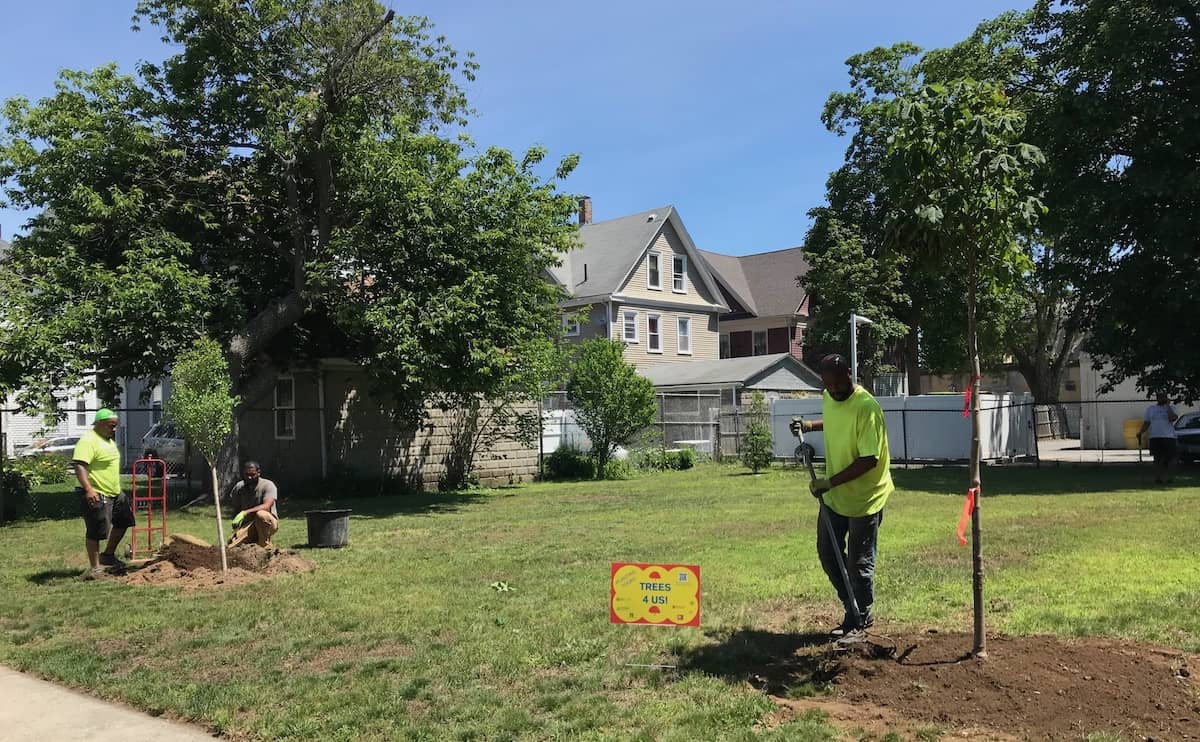
Photo Credit: Molly Henry / American Forests
July 2021
Rhode Island in 2020 became the pilot location for our Tree Equity Score Analyzer, an interactive tool that can be used in determining where to plant trees to create the biggest impact. In July 2021, the cities of Pawtucket and Central Falls put that tool to the test! We joined Groundwork RI — who is leading our capstone tree planting for our pilot program, Rhode Island Urban Forests for Climate and Health — in various tree planting events across the cities.
August 2021
Trees and forests are a critical nature-based solution to climate change. That’s why 1t.org aims to connect, empower and mobilize a global reforestation community to conserve, restore and grow one trillion trees globally by 2030. In August 2021, we celebrated the one-year anniversary of the U.S. chapter of 1t.org. As of last August, 55 U.S.-based governments, companies and nonprofit organizations collectively pledged to plant or prevent the loss of over 50 billion trees in cities and large forest landscapes here and abroad — and that number has only grown since then!

Photo Credit: Jason Houston / American Forests
September 2021
Through June and July of 2018, the 416 Fire tore through the southwestern portion of Colorado. In September 2021, we got to work. In partnership with the U.S. Forest Service and with help from the Southwest Conservation Corps, hundreds of trees and shrubs were loaded onto six horses to replant a hard to reach portion of Colorado’s San Juan National Forest where the 416 Fire left no seed-bearing conifers.
October 2021
To slow climate change and harness the full potential of forests, we must have the world on our side. In October 2021, American Forests President and CEO Jad Daley attended the 2021 United Nations Climate Change Conference, more commonly referred to as COP26. Following nearly two weeks of presentations, meetings, and listening to stakeholders from around the world, one thing was clear for Jad: Forests have grown to new heights as a climate solution.
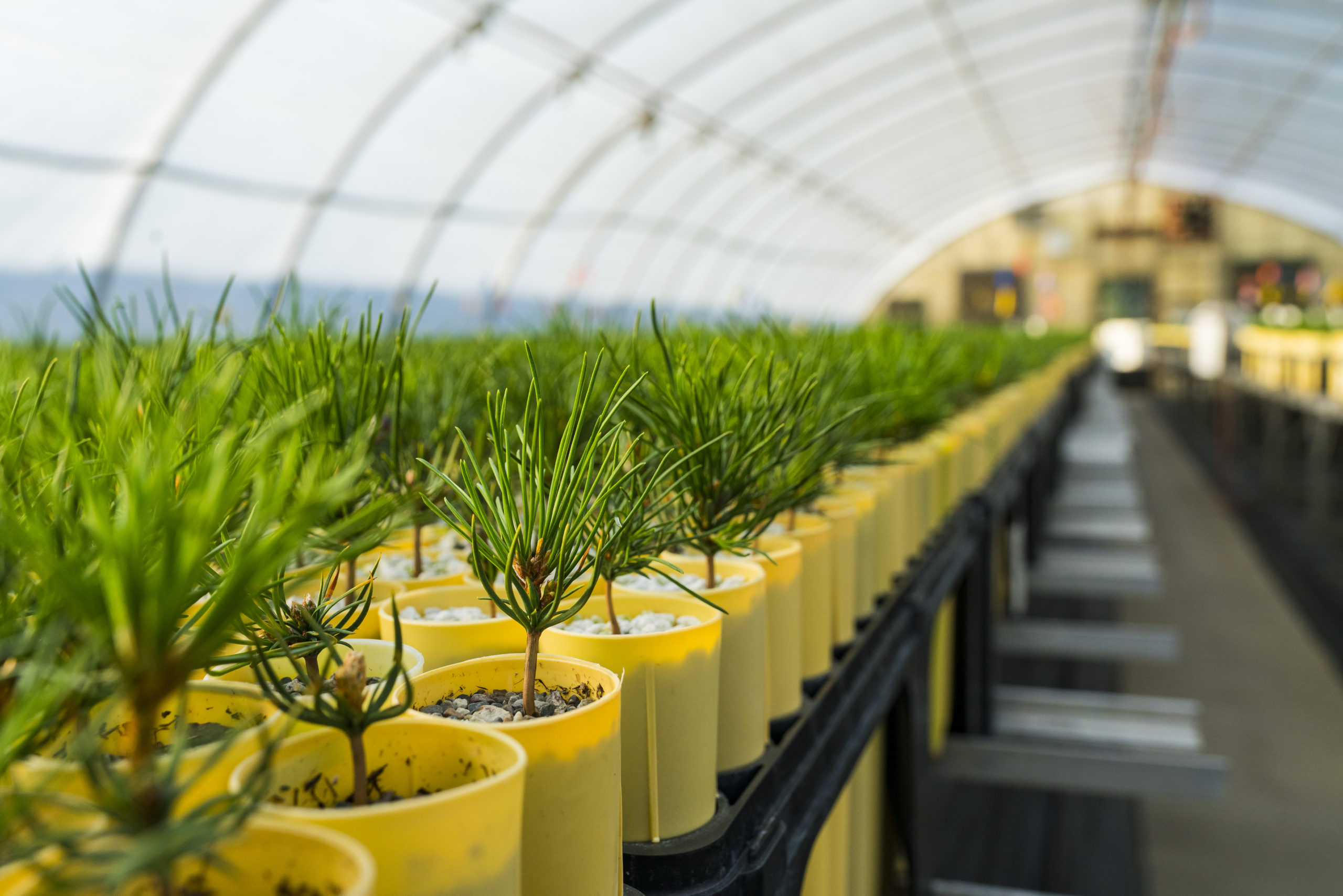
Photo Credit: Luciane Coletti / American Forests
November 2021
Forests are critical infrastructure. The U.S. Congress and Biden Administration bolstered that claim with the passage of the Infrastructure Investment and Jobs Act (IIJA). The IIJA invests in forests with a scale to match the critical issues of this moment, including natural climate solutions, wildfire, biodiversity, green jobs and more. It even includes the REPLANT Act, legislation we championed that provides the U.S. Forest Service with funding to plant or support the natural growth of more than 1.2 billion trees over the next decade.
December 2021
As proven by the passage of the Infrastructure Investment and Jobs Act, Congress is ready to act on forest conservation, and that includes urban forests. In December 2021, Jad Daley penned an op-ed with Representative McEachin (VA-04) on the importance of funding Tree Equity in cities across the United States.
January 2022
In January 2022, the U.S. Forest Service released its 10-year Wildfire Crisis Strategy that represents a monumental commitment to taking science-driven steps to reduce catastrophic wildfires, protect communities, and improve the health of our forests and wildlife. We’re working together with the Forest Service and partnering entities to develop an implementation plan and get this important work into action.

Photo Credit: USFWS Pacific Region
February 2022
At 13,803 feet above sea level, Mauna Kea is Hawaii’s highest volcano, and home to some of its rarest plants and songbirds, along with many ancient trees. Unfortunately, those species are suffering due to the introduction of non-native species, habitat loss and climate change. In February 2022 we released a video co-created with Salesforce to highlight the work we’re doing with partners on Mauna Kea to restore forests and protect these critical forest ecosystems.
March 2022
It’s been four years since the Camp Fire became the deadliest and most destructive wildfire in California’s history. Today, work is still being done to restore the many forests and communities impacted by the blaze. In March 2022, American Forests’ California team supported USFS Pacific Southwest Research Center in planting 4,000 Ponderosa pine and Douglas fir seedlings purchased by American Forests on the Camp Fire burn scar. This climate smart effort is unique in that these seedlings were carefully selected and packaged at the nursery so that they can be tracked based on where the seeds were collected.