
With decades of experience in forestry and natural resources, as well as a lifelong passion for conservation, American Forests Board Member Chad Hesters brings a deeply rooted dedication to protecting and restoring our forests.
After earning his bachelor’s degree in forestry and natural resources management from Texas A&M University, Chad has spent his career in progressive leadership roles within the natural resources and leadership advisory sectors. He is the chief executive officer of Boyden, the oldest international people advisory firm, but he is also an ISA Board Certified Master Arborist, a member of the Society of American Foresters, and now serves as Acting Chair of American Forests’ Board of Directors.
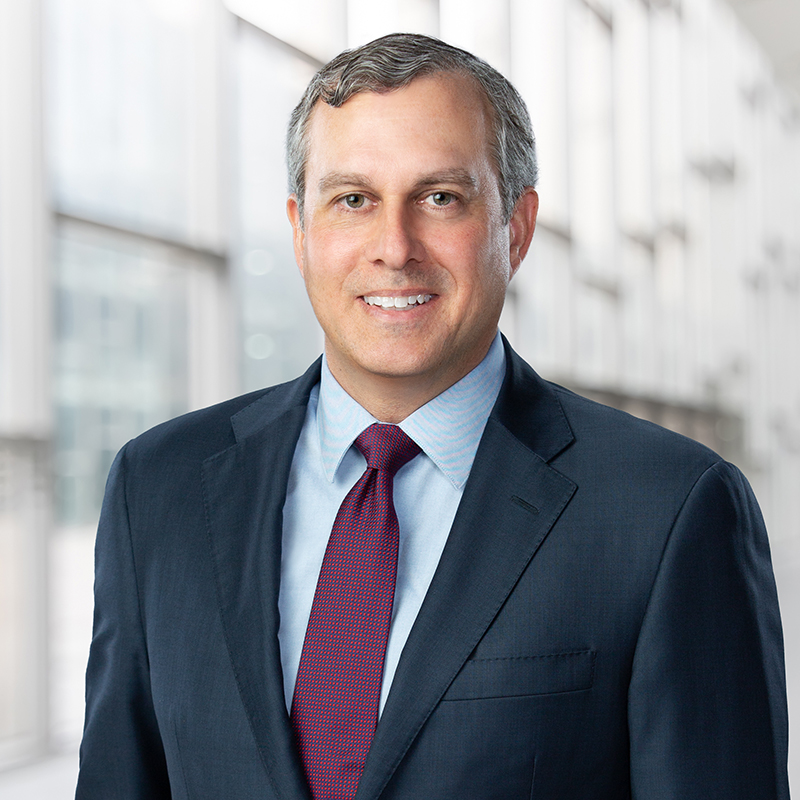
“American Forests tries to be a voice for all people in all forests. We can be the organization that pulls people together. They might not know what they have in common, but our job — and our opportunity — is to show what a lot of people, in fact most Americans, have in common. And it starts with healthy forests.”
In this Q&A, Chad reflects on the early influences that shaped his passion for conservation and why the future of forests — and American Forests’ unique opportunity to guide that future — depends on urgency and unity.
Q: Given your background, as well as a collection of certifications and affiliations, you clearly hold a deeply rooted passion for and interest in forests. When and how did that develop?
A: “I grew up in nature — backpacking, rock climbing and surfing — and from the earliest days, I had a sense that the world around us was worth contemplating and valuing. I probably never would have used those words as a teenager, but as far back as I can remember, I always felt like the natural world should be respected and was something that I enjoyed in the deepest recesses of my soul.”
Q: What are those earliest memories that you think created that foundational understanding of the need to protect and conserve forests?
A: “I remember being very young and my mother reading me the Dr. Seuss book “The Lorax.” We read it over and over again; we wore that thing out. Even at a young age, it was emotionally poignant for me — like something’s not right here. And I know that was the point. That’s what Seuss was trying to tell us: You get down to there’s one tree left, right? And the reasons we got there aren’t pretty. I think that’s the beginning of all this. I remember not having a sense of dread or fear per se, but the message made sense to me at a really early age. Those are my earliest memories of the idea of conservation and what can happen when we just let humans run rampant.”
Q: How has that foundation morphed and shaped your current view of conservation?
A: “I think that we have to balance reality. We have to figure out how to have the urgency of “The Lorax” and the understanding of the threat to our environment in “The Lorax” context. But we have to figure out how to solve it in a practical, realistic way that’s going to work for society and our current political system. That’s really where the hard work is. And, I think American Forests is better positioned than any other organization out there to be able to help solve for that problem in reality, in the context that we’re actually operating in. Not in some fairy tale, philosophical world, but in a world where we can actually make a difference.”
Q: You’re an accomplished businessman serving as the CEO of Boyden, the oldest international people advisory firm with over 70 offices in 40+ countries. How has your background in, and passion for, forestry fit into your career and other endeavors?
A: “I’ve spent my entire life internalizing the need for conservation of our resources. I’ve spent a lot of time outside. I’ve spent a lot of time thinking about how ecosystems work together and how it all connects. And if there’s a failure at one end of the ecosystem, it usually translates into something pretty profound later on down the line. It’s a lifelong passion. Somebody once told me, ‘you can tell what people care about by their checkbooks and their calendars.’ That has always resonated with me. There’s only so many hours in the day, and I would rather spend what time I have working with people I enjoy on things that matter. So, if I can do any small part to help American Forests and the broader forest conservation movement, that’s how I want to spend my time.”
Q: What drew you to get involved with American Forests specifically?
A: “I was at a moment in my life where I had some capacity to do something in the not-for-profit world and a desire to do it in the forest conservation space. I was lucky enough to get invited to be on the Board, and I’m really grateful for the opportunity. I’m grateful to be at American Forests because this is an organization that seemed to resonate with me with a mission to conserve what I believe to be a strategic natural resource, first and foremost. Second, the organization has a very strong science-based approach in which they do that. And then, I like that American Forests tries to be a voice for all people in all forests. I think that’s important in a time when there’s a lot of economic, political and social bifurcation. American Forests is an organization that can cross the political aisles and can speak for all people in our country, and that really matters to me. Because I’ve always felt like that’s who I am. And so, when you start going down the list of things that American Forests is, I felt there is a pretty strong connection with who I am. And it’s exciting to be with a high-quality organization that I feel such a strong personal alignment with, during a particular opportunity when we can all contribute to what this organization is going to look like for another 150 years. It’s pretty cool.”
Q: In your time with American Forests, has anything surprised you or expanded your view of conservation?
A: “I think the one thing that is a threat and an opportunity to the forest conservation movement, in general, is that there are so many diverse opinions and perspectives out there on the topic. And if you’re not careful, in this divisive polarizing environment, there’s a natural tendency to want to orient to people that think and act like you. But one of the things that’s most encouraging to me, that might have been unexpected, was that inside American Forests as an organization, across the whole stakeholder group — staff, board, individual donors, corporations or foundations — there’s such a broad distribution of socioeconomic and political views that fit into the Venn diagram of this organization and that find commonality in American Forests’ mission and the way it goes about accomplishing that mission.
And, because I’ve seen that in real-time, I’m excited that there are more people that — once they understand what the mission is and what the vision of the organization is — there’s not a reason that every American can’t be a supporter of American Forests as an organization. I don’t want to lose the idea that people can care about the world around them, and we can get past ourselves and the divisiveness and find ourselves in a better place as a society. We can be accepting of people from all kinds of perspectives, and we can go do good things together. That level of discourse is missing from our society, and American Forests can help fill some of that gap. And, people can find some hope and do some good. I think we’re at a point now where people are desperate to find something to believe in that is real, true and unifying. And we’ve got it sitting right here.”
Q: If you had a microphone for one minute, what would you hope to communicate to your fellow American citizens about the need to conserve our forests?
A: “Just because you don’t see it or it’s not right in front of your face, the ecosystems that keep our world alive have got some pretty significant headwinds right now. And we need to think about this strategically as a country and as a world. The implications of not doing so or ignoring it are pretty profound, not just for us, but for our kids’ and grandkids’ generations. The issue is moving exponentially faster than it was even just 20 years ago. So, there’s a strong sense of urgency around this, and I feel like we just can’t sit around and hope to solve it in the next generation.”
Q: What is your vision for the future impact American Forests can have?
A: “This is ultimately my hope for this organization: that we will continue our mission, continue to grow in recognition inside the U.S. of what our capabilities are, and that we’re a unifier of different pockets of conservationists. There are people that really care about Tree Equity issues in urban environments, which is important. There are people that care about the bark beetle issue. We have people that care a lot about wildlife and it being around. And we have people that care about water, which is another big issue. And so, somewhere in that Venn diagram is where we can all meet and find a common cause, a common reason to exist, and a common reason to support each other and the work here.
And that is going to be the key to American Forests’ success over the near and long term. We can be the organization that pulls people together. They might not know what they have in common, but our job — and our opportunity — is to show what a lot of people, in fact most Americans, have in common. And it starts with healthy forests, whether they’re urban forests, rural forests, Tribal forests, all forests. That’s my vision for what our opportunity is, why we exist and what we can do with the resources that we have in front of us.”
Q: Looking ahead, what do you hope your impact will be?
A: “For me, it’s the little things that happen every day in our life where we can have impact. If you sit around waiting for the big moment, you might spend your whole life waiting. The call to action for me is daily, and I would love for my legacy to be that I took time to invest in the moment on something I cared about deeply. And so my message for others is don’t wait around for the big moment. The moment is right in front of you. Go read “The Lorax” to your kids. Take time to listen to the wind blowing in the trees, and ask yourself, ‘what would the world be like without them’?”